
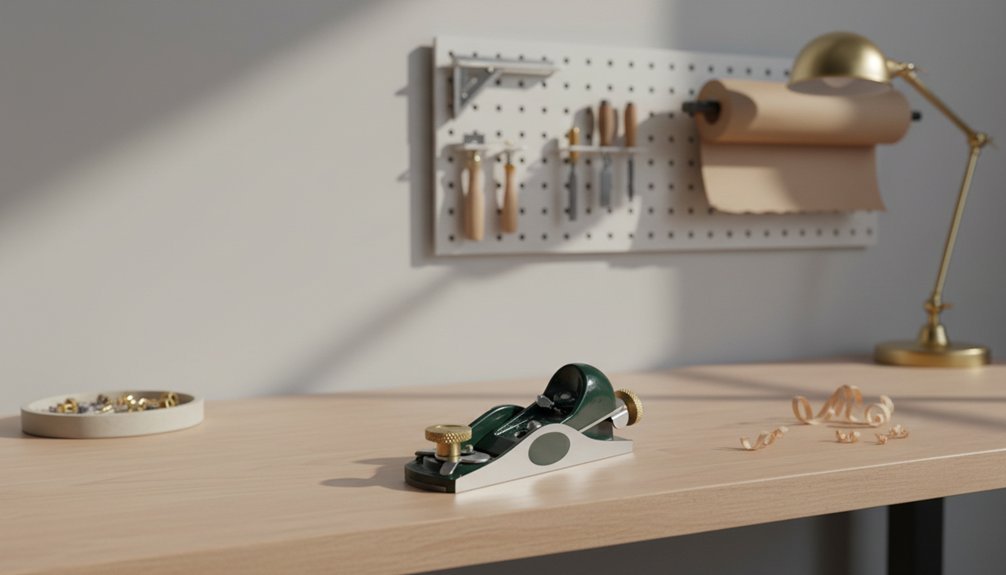
You’ll want a block plane that balances precision and control for fine tasks like trimming miters or smoothing end grain.
Models like the Groz 39790 BP/605 and Woodriver Low Angle offer adjustable mouths and durable iron bodies for stability.
Japanese kanna-style planes such as the KAKURI 42mm or SUIZAN 1.7″ deliver ultra-thin shavings with laminated blades and pull-stroke efficiency.
Most handle hardwoods well, though some need tuning out of the box.
Expect features like fine-depth adjusters, chipbreakers, and flat soles that stay true.
Each has trade-offs between setup time and ready-to-use performance, depending on your workflow—there’s more to evaluate if you’re matching one to your specific needs.
| Groz 39790 BP/605 Block Plane |  | Best Overall | Blade Width: 35 mm | Cutting Width: 35 mm | Blade Angle: 13.5° | VIEW LATEST PRICE | Read Our Analysis |
| KAKURI Japanese Hand Plane 42mm |  | Best for Traditionalists | Blade Width: 42 mm | Cutting Width: 36 mm | Blade Angle: Not specified | VIEW LATEST PRICE | Read Our Analysis |
| SUIZAN Kanna Japanese Wood Planer 1.7 |  | Compact Precision Pick | Blade Width: 42 mm | Cutting Width: Not specified | Blade Angle: Not specified | VIEW LATEST PRICE | Read Our Analysis |
| KAKURI Japanese Block Plane 60mm (Made in Japan) |  | Largest Cutting Width | Blade Width: 60 mm | Cutting Width: 50 mm | Blade Angle: Not specified | VIEW LATEST PRICE | Read Our Analysis |
| Low Angle Block Plane Adjustable Hand Planer | 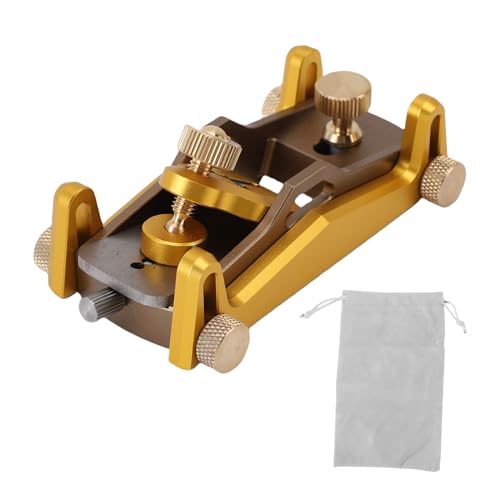 | Most Precise Adjustment | Blade Width: Not specified | Cutting Width: Not specified | Blade Angle: 42° (shear-cutting angle) | VIEW LATEST PRICE | Read Our Analysis |
| KAKURI Japanese Hand Plane 42mm |  | Eco-Conscious Choice | Blade Width: 42 mm | Cutting Width: 36 mm | Blade Angle: Not specified | VIEW LATEST PRICE | Read Our Analysis |
| Woodriver Low Angle Block Plane With Adjustable Mouth | 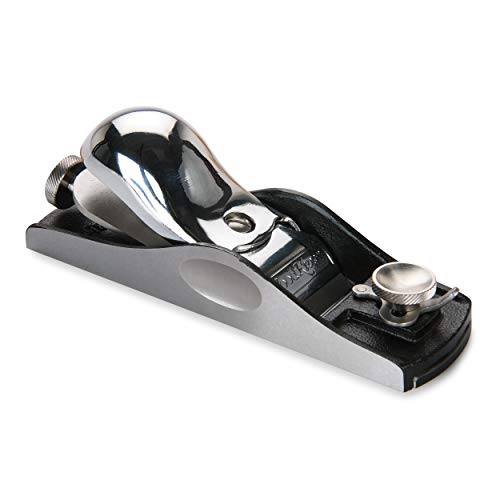 | Value Leader | Blade Width: 1-5/8” (41.3 mm) | Cutting Width: Not specified | Blade Angle: 25° | VIEW LATEST PRICE | Read Our Analysis |
| Bench Dog No. 60-1/2 Block Plane |  | Chatter-Free Performance | Blade Width: Not specified | Cutting Width: Not specified | Blade Angle: Low-angle (bed angle not specified) | VIEW LATEST PRICE | Read Our Analysis |
More Details on Our Top Picks
Groz 39790 BP/605 Block Plane
If you’re tackling fine end-grain work or small chamfers, the Groz 39790 BP/605 Block Plane gives you solid control without breaking the bank. Its 13.5° low-angle iron slices cleanly through end grain, and the 35 mm cutter handles most small jobs with ease. You’ll appreciate the adjustable mouth—it lets you fine-tune tear-out and shaving thickness. The depth of cut is fully adjustable, so you can switch from light to moderate shavings smoothly. The sole stays flat within 0.003″, which is reliable for a tool at this price. It’s 160 mm long, offering stability without being bulky. Pretty solid for everyday precision work.
- Blade Width:35 mm
- Cutting Width:35 mm
- Blade Angle:13.5°
- Adjustment Mechanism:Fully adjustable depth of cut
- Body Material:Not specified (likely cast metal)
- Plane Type:Block plane
- Additional Feature:Adjustable mouth control
- Additional Feature:13.5° low blade angle
- Additional Feature:Precision depth adjustment
KAKURI Japanese Hand Plane 42mm
Choosing the Kakuri Japanese Hand Plane 42mm makes sense when you value precision and tradition in fine woodworking. You’ll appreciate its compact size, smooth white oak body, and razor-sharp laminated high-carbon steel blade. This pull-style kanna glides cleanly across grain, thanks to its chipbreaker design that reduces tear-out. It’s lightweight, well-balanced, and ideal for detailed smoothing or chamfering edges. The 36 mm cutting width handles tight spaces with ease. You’ll need to tune the blade with a hammer first, which might surprise beginners. Still, pros love how easy it is to sharpen and maintain. Made in Japan, it blends old-world craftsmanship with reliable performance—perfect for precise, hand-powered control.
- Blade Width:42 mm
- Cutting Width:36 mm
- Blade Angle:Not specified
- Adjustment Mechanism:Hammer fine-tuning required
- Body Material:White oak
- Plane Type:Japanese block plane (kanna)
- Additional Feature:Pull-stroke kanna design
- Additional Feature:Laminated high-carbon steel blade
- Additional Feature:Includes English manual
SUIZAN Kanna Japanese Wood Planer 1.7
You get precision and tradition in one compact tool with the Suizan Kanna Japanese Wood Planer 1.7″, a top pick for woodworkers who value clean cuts and time-honored technique. You’ll pull it smoothly toward you, using authentic Japanese method, not push it like Western planes. It’s made in Japan by craftsmen who’ve kept the art alive for generations. The 1.7-inch blade gives clean, flat surfaces, often skipping sanding. Weighing just 0.4 lbs and measuring 6 x 2 x 1.6 inches, it’s small but solid. You’ll feel the quality, though mastering the pull-stroke takes practice.
- Blade Width:42 mm
- Cutting Width:Not specified
- Blade Angle:Not specified
- Adjustment Mechanism:Hammer fine-tuning required
- Body Material:Not specified (likely wood)
- Plane Type:Japanese wood planer (kanna)
- Additional Feature:Made in Japan
- Additional Feature:Traditional pull-plane technique
- Additional Feature:Ultra-lightweight at 0.40 lb
KAKURI Japanese Block Plane 60mm (Made in Japan)
The Kakuri Japanese Block Plane 60mm delivers precision smoothing for woodworkers who value traditional craftsmanship and modern performance. You pull this plane toward you, using the Japanese technique for cleaner, more controlled cuts with less effort. Its 60mm-wide blade, forged from high-carbon steel laminated with soft iron, stays sharp and resists splitting grain. A built-in chipbreaker improves performance, while the oil-finished white oak body offers durability and smooth glide. Though it’s ready to use out of the box, you’ll likely tweak the blade with a hammer for perfect tuning. At 10.2 inches, it’s large enough to handle broad surfaces efficiently. Trusted by both beginners and pros, it balances weight and control beautifully.
- Blade Width:60 mm
- Cutting Width:50 mm
- Blade Angle:Not specified
- Adjustment Mechanism:Hammer fine-tuning required
- Body Material:White oak
- Plane Type:Japanese block plane (kanna)
- Additional Feature:Oil-finished white oak body
- Additional Feature:Two-handed smoothing efficiency
- Additional Feature:50 mm cutting width
Low Angle Block Plane Adjustable Hand Planer
Low Angle Block Plane Adjustable Hand Planer
Who knew a palm-sized tool could handle figured maple like a hot knife through butter? You’ll love how this low angle block plane tackles tricky grain with its 42° shear-cut geometry—12° base plus a 30° bevel—virtually eliminating tear-out. The 62 HRC tool steel blade stays sharp and gives you 0.07 mm shavings, thinner than printer paper. Adjust the depth mid-stroke with the brass wheel’s 0.05 mm precision, no loosening needed. Its aerospace-grade aluminum body keeps it light, while the rotating back plate (0°–45°) handles chamfers and rabbets. Built to last 10,000+ cycles, it’s a compact powerhouse for fine furniture or luthier work.
- Blade Width:Not specified
- Cutting Width:Not specified
- Blade Angle:42° (shear-cutting angle)
- Adjustment Mechanism:Brass depth wheel, 0.05 mm precision
- Body Material:CNC-milled aluminum
- Plane Type:Low angle block plane
- Additional Feature:MIT-engineered performance
- Additional Feature:0.07 mm ultra-fine shavings
- Additional Feature:Rotating back plate 0°–45°
KAKURI Japanese Hand Plane 42mm
Crafting clean chamfers and silky-smooth surfaces comes naturally with the Kakuri Japanese Hand Plane 42mm, a go-to choice for detail-oriented woodworkers who value precision over power. You pull this compact plane toward you, using traditional kanna mechanics for controlled, low-effort cuts. Its 42mm high-carbon steel blade, paired with a chipbreaker, resists tear-out and splits, ideal for fine chamfers and smoothing hardwood edges. Made in Japan from eco oak, the body is durable, lightweight, and sustainably sourced. At 5.9 inches, it fits tight spaces, and though the blade works out of the box, you’ll likely tweak it with a hammer for peak performance. Great for beginners and pros alike, it ships with clear English instructions and delivers reliable, refined results—just don’t expect aggressive stock removal.
- Blade Width:42 mm
- Cutting Width:36 mm
- Blade Angle:Not specified
- Adjustment Mechanism:Hammer fine-tuning required
- Body Material:ECO oak
- Plane Type:Japanese block plane (kanna)
- Additional Feature:ECO oak body material
- Additional Feature:Razor-sharp out-of-box blade
- Additional Feature:Distinct grain appearance
Woodriver Low Angle Block Plane With Adjustable Mouth
Looking for precision in tight spaces? The Woodriver Low Angle Block Plane with Adjustable Mouth delivers just that. You’ll appreciate its 12° bed angle and 25° blade tilt, giving you clean, low-effort cuts on end grain and tricky joins. Its ductile iron body stays durable, while the high-carbon tool steel blade holds a sharp edge. The adjustable mouth lets you fine-tune the opening for everything from aggressive stock removal to silky-smooth finishing. At 2.04 pounds, it’s light but balanced. The knuckle-style lever cap makes blade changes quick. With a solid 4.5-star rating and strong Amazon rankings, it’s a trusted choice—though some wish it came with extras like a storage case.
- Blade Width:1-5/8” (41.3 mm)
- Cutting Width:Not specified
- Blade Angle:25°
- Adjustment Mechanism:Adjustable mouth, lever cap
- Body Material:Ductile iron
- Plane Type:Low angle block plane
- Additional Feature:Knuckle-style lever cap
- Additional Feature:Ductile iron base
- Additional Feature:Part of Woodcraft family
Bench Dog No. 60-1/2 Block Plane
You’ll appreciate the Bench Dog No. 60-1/2 Low Angle Block Plane if crisp, controlled cuts in end grain matter to your work—think fitting drawer fronts or fine-tuning miters. Its low-angle design slices cleanly with less effort, and the adjustable mouth helps you take whisper-thin shavings while reducing tearout. The 1/8″ thick blade stays stiff and resists chatter, especially since the frog and base are cast as one piece. You get precision machining, fine-grain castings, and a certificate verifying sole flatness and blade hardness. It’s great for detail tasks like shaping curves or trimming joints. You’ll get the plane, a storage case, sock, and manual—all adding up to solid value for fine woodworking.
- Blade Width:Not specified
- Cutting Width:Not specified
- Blade Angle:Low-angle (bed angle not specified)
- Adjustment Mechanism:Adjustable mouth, precision machining
- Body Material:Fine-grain casting (metal)
- Plane Type:Low angle block plane
- Additional Feature:One-piece casting frog
- Additional Feature:Includes inspection certificate
- Additional Feature:Comes with storage case
Factors to Consider When Choosing a Block Plane for Fine Woodworking
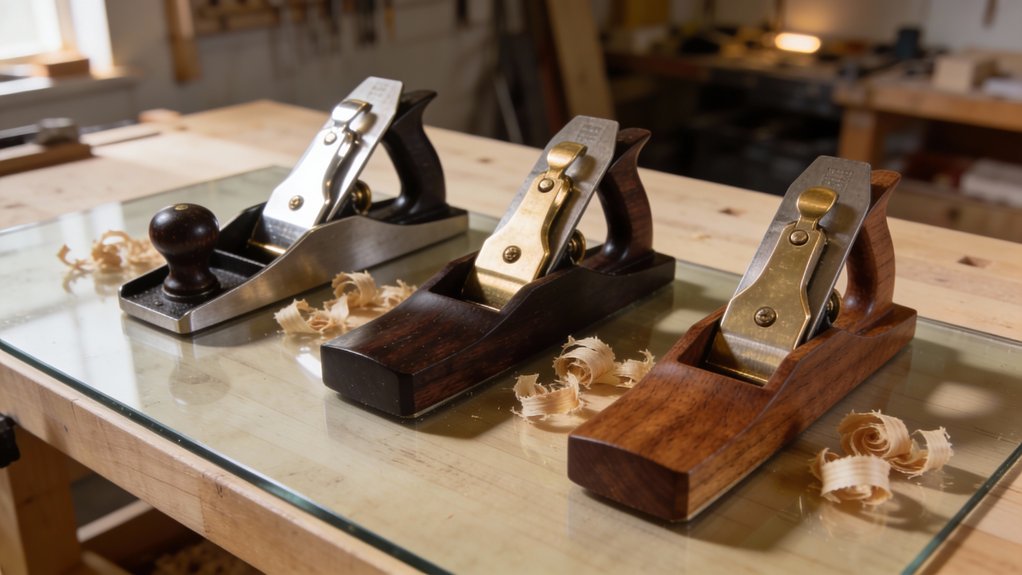
You want a block plane that’ll handle fine work without fuss, so start by checking the blade material—A2 or M2 steel holds an edge better but costs more. A low cutting angle gives smoother shaving clearance, while an adjustable mouth lets you tweak performance for tricky grain. Don’t overlook body durability and precise depth control; they make a real difference when you’re dialing in thin, even cuts.
Blade Material Quality
Though blade material might seem like a small detail, it plays a big role in how well your block plane performs on fine woodworking tasks. You’ll want high-carbon steel blades—they hold a sharp edge longer and give you smoother, more consistent shavings. Hardened tool steels, especially above 58 HRC, resist chipping and rolling, so you won’t need to hone as often. Some planes use laminated blades: a thin layer of hard steel fused to softer iron, which gives you a razor-sharp edge that’s easier to sharpen and less likely to crack. Blade thickness matters too—1/8″ blades reduce chatter better than thinner ones, helping you make cleaner cuts. Proper heat treatment guarantees the right balance of hardness and toughness, so always check for models with documented specs. Consistent tempering means predictable performance you can rely on, even after months of use.
Cutting Angle Design
When working with tricky grain or fine joinery, the cutting angle of your Block Plane can make or break the cut. You’ll want a low-angle plane—around 12° to 13.5°—to slice cleanly through end grain with less effort and reduced tear-out. These low-angle designs shear material efficiently, especially when paired with a sharp blade and fine adjustment. For tougher figured wood, bumping up the effective angle by honing a steeper bevel adds control. Remember, in bevel-up planes, the bed angle plus your bevel angle equals the final cutting angle—so even a 5° change matters. Some planes let you tweak this on the fly with rotating caps or adjustable backs, giving you flexibility across different woods. You gain smoother results on delicate surfaces, but sacrifice a bit of aggression. It’s all about balancing precision and performance where you need it most.
Adjustable Mouth Feature
Adjustable Mouth Feature
A properly adjusted mouth on your Block Plane can make a noticeable difference in cut quality, especially when dialing in for fine tasks. You can tighten the gap in front of the blade for ultra-thin shavings, which reduces tear-out on tricky grain. This narrow opening supports wood fibers right up to the cut, giving you cleaner results on end grain or figured stock. Need to remove material faster? Just widen the mouth—no need to switch planes. Adjustable mouths let you switch between finishing and roughing with ease. But be careful: a tight gap demands precise blade alignment and a flat sole, or you’ll see chatter and uneven cuts. Small misalignments get magnified, ruining your surface. For fine work, the control and refinement an adjustable mouth offers is worth the extra setup time. It’s a smart feature if you demand versatility without sacrificing finish quality.
Body Construction Durability
You’ve dialed in the mouth opening for that paper-thin shaving, but if the plane’s body flexes under pressure, all that fine adjustment goes out the window. You need a body made from dense, stable materials—like cast iron, ductile iron, or CNC-milled aerospace aluminum—because they resist vibration and won’t chatter during delicate cuts. A one-piece bed and frog or precision-machined mating surfaces keep the blade aligned and prevent shifting over time. Look for corrosion-resistant finishes, such as anodized metal or sealed wood, to guard against moisture and wear. The sole should be dead flat—within 0.05–0.08 mm—so it rides true on the wood. Durable adjustment parts, like metal depth wheels and brass components, hold their settings without slop. These features add up to a plane that stays accurate, run after run, even with heavy use.
Precision Depth Control
Precision depth control
Though it’s easy to overlook, the depth adjustment mechanism makes all the difference when dialing in whisper-thin shavings for delicate tasks like fitting dovetails or voicing a violin. You’ll want a fine-threaded depth wheel or micrometer-style adjuster—it lets you tweak the blade mid-stroke without loosening anything. Look for planes with increments as small as 0.05 mm; they’re essential for luthiers or fine furniture work where precision is non-negotiable. A clear, graduated scale in 0.1 mm or 0.001″ steps helps you replicate settings later. Positive lock features or detents keep the depth steady under pressure, so it won’t drift on long passes. Pair that with a low-angle iron and fully supported blade, and even cuts under 0.07 mm stay smooth, chatter-free, and tear-free. It’s not fussy—it’s focused.
Conclusion
You’ve seen the top choices, but isn’t it funny how the smallest tool can shape your work the most? Each block plane here brings something unique—precision, durability, or adjustability. Whether you prefer Western or Japanese designs, there’s a fit for your hand and method. Pick one that balances performance and practicality, and it’ll earn its place in your toolkit, day after day.