
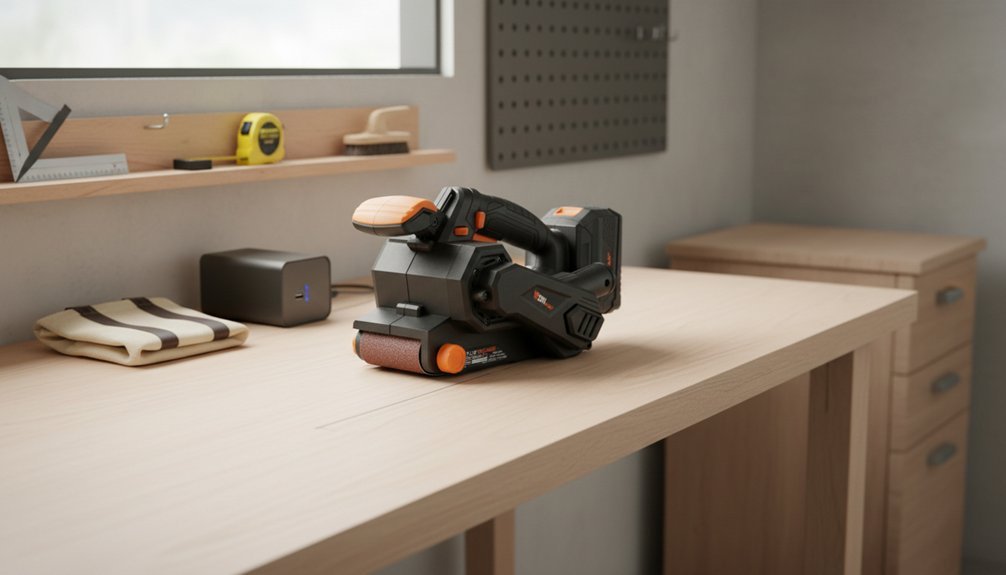
You get strong material removal with today’s top cordless belt sanders, like the WEN 20V and DEWALT 20V MAX XR, which offer variable speeds and brushless power for longer runtimes.
Models like the SEESII detail sander and Makita 18V provide precision in tight spots, while larger belts handle flat surfaces fast. Battery sharing within systems saves money, and tool-free changes speed up work.
You’ll find options with dust control, solid grips, and multi-position handles that help reduce fatigue on long jobs — keep exploring to match the right features to your workflow.
| WEN 20V Cordless Belt Sander with Battery |  | Best Overall | Battery Voltage: 20V Max | Belt Size: 3″ x 18″ | Variable Speed: Yes (400–1150 ft/min) | VIEW LATEST PRICE | Read Our Analysis |
| DEWALT 20V MAX XR Bandfile (DCM200B) |  | Professional Grade | Battery Voltage: 20V MAX | Belt Size: Not specified (Bandfile-specific) | Variable Speed: Yes (up to 5,600 ft/min) | VIEW LATEST PRICE | Read Our Analysis |
| Ryobi R18BS-0 18V ONE+ Cordless Belt Sander (Battery & Charger Excluded) |  | Best Value | Battery Voltage: 18V | Belt Size: 76 x 533 mm (~3″ x 21″) | Variable Speed: Implied high performance (no explicit range) | VIEW LATEST PRICE | Read Our Analysis |
| Seesii Belt Sander 1/2″ x 18 |  | Budget-Friendly Pick | Battery Voltage: 20V | Belt Size: 1/2″ x 18″ | Variable Speed: Yes (500–1700 ft/min) | VIEW LATEST PRICE | Read Our Analysis |
| SEESII Cordless Detail File Sander with 6 Speeds |  | Editor’s Choice | Battery Voltage: 4.0 Ah (implied 20V platform) | Belt Size: Dual interchangeable arms (two sizes) | Variable Speed: Yes (6 speeds, 3,800–9,300 RPM) | VIEW LATEST PRICE | Read Our Analysis |
| Cordless Belt Sander for Makita 18V | 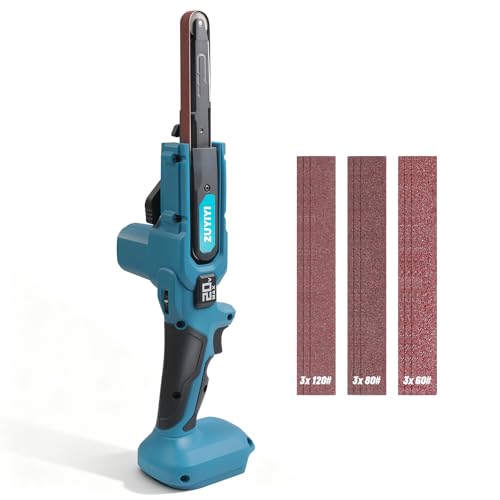 | Best for DIYers | Battery Voltage: 18V / 21V | Belt Size: 1/2″ x 18″ | Variable Speed: Yes (500–1700 ft/min) | VIEW LATEST PRICE | Read Our Analysis |
| Cordless Belt Sander 16.8V with 15 Belts |  | Most Popular | Battery Voltage: 16.8V | Belt Size: Not specified | Variable Speed: Yes (7000 RPM) | VIEW LATEST PRICE | Read Our Analysis |
| Makita 18V Brushless Cordless Belt Sander |  | High-Performance Pick | Battery Voltage: 18V | Belt Size: 3/8″ x 21″ | Variable Speed: Not explicitly stated | VIEW LATEST PRICE | Read Our Analysis |
More Details on Our Top Picks
WEN 20V Cordless Belt Sander with Battery
If you’re after a cordless belt sander that balances power, portability, and convenience, the WEN 20418 20V Max Cordless Belt Sander is a strong fit—especially if you already use tools from the WEN 20V Max lineup. You get variable speeds from 400 to 1,150 feet per minute, so you can tackle softwoods or tougher materials with ease. The lock-on switch saves hand fatigue during long sessions, and the quick-release lever makes belt changes fast. Its 4.0 Ah battery provides solid runtime, and the LED gauge lets you check charge at a glance. You’ll appreciate the included dust bag and 1-1/4-inch port for cleaner work. While it’s not the most powerful sander out there, it’s reliable, well-priced, and shares batteries across the WEN 20V system—ideal if you’re building a cordless collection.
- Battery Voltage:20V Max
- Belt Size:3″ x 18″
- Variable Speed:Yes (400–1150 ft/min)
- Tool-Free Belt Change:Yes (quick-release lever)
- Brushless Motor:No
- Included Battery:Yes (4.0 Ah)
- Additional Feature:Onboard LED charge gauge
- Additional Feature:Lock-on power switch
- Additional Feature:Detachable dust bag
DEWALT 20V MAX XR Bandfile (DCM200B)
Choose the DeWalt 20V MAX XR Bandfile (DCM200B) when you need precision sanding in tight or angled spaces, especially on curved or irregular surfaces. You get a brushless motor with 700 MWO of power and speeds up to 5,600 ft/min for solid performance. The variable speed dial and trigger control let you adjust on the fly, which helps with delicate tasks. Its 104° rotating arm reaches awkward spots, and you can store it flat. Switch contact arms for different jobs, and change belts tool-free in seconds. You’ll like the control and flexibility, though it’s sold bare—no battery or charger included.
- Battery Voltage:20V MAX
- Belt Size:Not specified (Bandfile-specific)
- Variable Speed:Yes (up to 5,600 ft/min)
- Tool-Free Belt Change:Yes (tool-free)
- Brushless Motor:Yes
- Included Battery:No (bare tool only)
- Additional Feature:104° rotating arm
- Additional Feature:End-user adjustable speed
- Additional Feature:Changeable contact arm
Ryobi R18BS-0 18V ONE+ Cordless Belt Sander (Battery & Charger Excluded)
Get the Ryobi R18BS-0 18V ONE+ Cordless Belt Sander when you need powerful, mobile sanding for big surface jobs without being chained to an outlet. You get solid performance at 250 m/min belt speed, ideal for fast material removal. It uses a 76 x 533 mm belt—common in many sanders—and includes three belts to get you started. The multi-position top handle lets you sand flush to walls and reduces fatigue during long use. It’s part of the expansive Ryobi ONE+ 18V system, so if you already own tools from the line, you’ll appreciate the battery compatibility. While it doesn’t come with a battery or charger, its versatility and smart design make it a practical, no-fuss choice for pros and serious DIYers alike.
- Battery Voltage:18V
- Belt Size:76 x 533 mm (~3″ x 21″)
- Variable Speed:Implied high performance (no explicit range)
- Tool-Free Belt Change:Not specified
- Brushless Motor:Not specified
- Included Battery:No (excluded)
- Additional Feature:Multi-position top handle
- Additional Feature:Flush-to-wall sanding
- Additional Feature:Part of ONE+ system
Seesii Belt Sander 1/2″ x 18
The Seesii Belt Sander 1/2″ x 18″ puts cordless power and precision in your hand, making it a smart pick for DIYers and pros who tackle grinding, deburring, or smoothing in tight spots. You get a 20V tool with six-speed settings, hitting up to 1700 ft/min for solid material removal on metal, wood, or plastic. It includes two 2.0Ah batteries, giving about 15 minutes of runtime each, which suits shorter jobs. The tool-free belt change and included 9 belts (60–120 grit) get you started fast. A lock-on switch eases long sessions, and while runtime’s limited, the lightweight design helps in tight corners or overhead spots.
- Battery Voltage:20V
- Belt Size:1/2″ x 18″
- Variable Speed:Yes (500–1700 ft/min)
- Tool-Free Belt Change:Yes (tool-free quick-change)
- Brushless Motor:No
- Included Battery:Yes (2 × 2.0Ah)
- Additional Feature:2 batteries included
- Additional Feature:15-minute runtime per battery
- Additional Feature:Ready-to-use complete set
SEESII Cordless Detail File Sander with 6 Speeds
You’ll find the Seesii Cordless Detail File Sander with 6 Speeds stands out for DIYers and pros who need precision in tight spots without sacrificing power. Its brushless motor delivers strong, consistent performance while lasting longer than brushed models. With six speeds from 3,800 to 9,300 RPM, you can sand wood, metal, or plastic efficiently. The 100° pivoting arm reaches tight corners and curves, great for welds or detailed woodworking. Dual sanding arms and tool-free belt changes make swaps quick. You get a 4.0 Ah battery, charger, and 16 belts. A dust port connects to your vacuum, keeping your workspace clean and visibility high.
- Battery Voltage:4.0 Ah (implied 20V platform)
- Belt Size:Dual interchangeable arms (two sizes)
- Variable Speed:Yes (6 speeds, 3,800–9,300 RPM)
- Tool-Free Belt Change:Yes (tool-free system)
- Brushless Motor:Yes
- Included Battery:Yes (4.0 Ah)
- Additional Feature:Dual interchangeable arms
- Additional Feature:100° pivoting sanding arm
- Additional Feature:Built-in dust port adapter
Cordless Belt Sander for Makita 18V
Save time on tough jobs with a Cordless Belt Sander built for Makita 18V users who need power without the cord. You get up to 3000 RPM from a high-performance motor, beating most pneumatic models. Six variable speeds, from 500 to 1,700 feet per minute, let you adjust for wood, metal, or plastic. The 1/2″ x 18″ mini belt sander reaches tight spaces and handles rust, burrs, or spot welds with ease. It’s compatible with Makita 18V (BL1830, BL1840, etc.) and 21V batteries—sold separately. Tool-free belt changes mean fast swaps between included grits. Compact design cuts fatigue, but remember: no battery or charger comes in the box.
- Battery Voltage:18V / 21V
- Belt Size:1/2″ x 18″
- Variable Speed:Yes (500–1700 ft/min)
- Tool-Free Belt Change:Yes (tool-free replacement)
- Brushless Motor:Not specified
- Included Battery:No (not included)
- Additional Feature:Compact all-angle design
- Additional Feature:10 included sanding belts
- Additional Feature:Handles spot weld removal
Cordless Belt Sander 16.8V with 15 Belts
Need a sander that tackles tight corners and heavy-duty tasks without sacrificing power or portability? You’ve got it with the Cordless Belt Sander 16.8V. It packs a 7000 RPM motor, so you can strip wood, shape edges, or smooth metal fast. The 1.5 Ah battery lasts over 50 minutes and charges quickly—perfect for long sessions. Safety features keep the belt locked in place, so you won’t deal with slips mid-job. It handles curves, flat surfaces, and even drill bits or blades. Plus, you’re getting 15 belts (grits 80–1000), so you can go from aggressive removal to fine finishing.
- Battery Voltage:16.8V
- Belt Size:Not specified
- Variable Speed:Yes (7000 RPM)
- Tool-Free Belt Change:Not specified
- Brushless Motor:Not specified
- Included Battery:Yes (1.5 Ah)
- Additional Feature:7000 RPM motor speed
- Additional Feature:50+ minute runtime
- Additional Feature:Grits 80–1000 included
Makita 18V Brushless Cordless Belt Sander
For woodworkers and metal fabricators who need power without the tether, the Makita XSB01Z 18V Brushless Cordless Belt Sander delivers corded-level performance in a portable 3/8″ x 21″ format. You’ll appreciate the brushless motor’s efficiency, giving longer runtime and less heat buildup during tough jobs. Its compact sanding arm pivots up to 160°, so it stores easily and reaches tight corners. The LED light adjusts with the arm, keeping your workspace visible. An electric brake stops the belt fast, speeding up repositioning. While it’s sold tool-only—battery and charger are separate—it’s compatible with Makita’s 18V LXT® platform, so you likely already own what you need.
- Battery Voltage:18V
- Belt Size:3/8″ x 21″
- Variable Speed:Not explicitly stated
- Tool-Free Belt Change:Not specified
- Brushless Motor:Yes
- Included Battery:No (tool only)
- Additional Feature:160° pivoting sanding arm
- Additional Feature:Electric brake system
- Additional Feature:Adjustable L.E.D. light
Factors to Consider When Choosing Cordless Belt Sanders for Material Removal
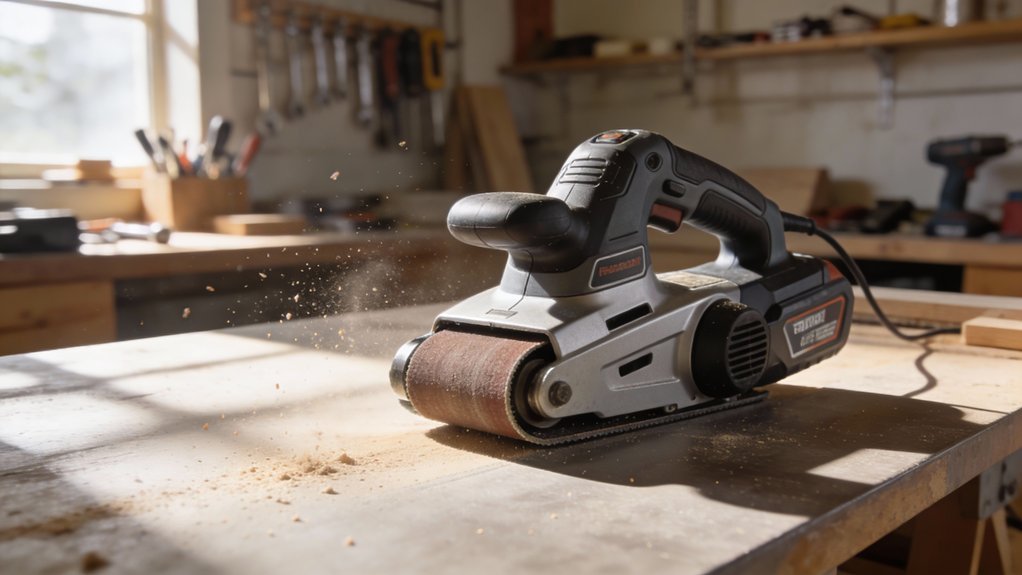
You’ll want a Cordless Belt Sander that runs on a battery system you already own, so check power source compatibility first. A brushless motor gives you longer runtime and less maintenance, while variable speed control helps you tackle everything from soft pine to tough hardwoods without bogging down. Look for models with 3-inch by 21-inch belts, a comfortable grip, and a balanced design—those make a real difference when you’re stripping material fast.
Power Source Compatibility
Power source compatibility
Ever wonder why your Cordless Belt Sander isn’t delivering the power or runtime you expected? It might be a battery compatibility issue. You’ve got to match the sander’s voltage—like 18V, 20V, or 16.8V—to your existing batteries, or you risk damage and poor performance. If the tool doesn’t fit your brand’s battery platform, you’ll need extra chargers and packs, raising costs. Higher amp-hour (Ah) batteries, like 4.0 Ah, last longer than 1.5 Ah ones, which helps on big jobs. But don’t forget: bigger batteries add weight, changing how the sander feels in your hands. Over time, that extra heft can tire you out. Check if the sander comes bare or with batteries—some brands let you swap cells across tools, saving money and space. Smart compatibility means better efficiency, less clutter, and more control when removing material fast.
Motor Type Matters
While both motor types power Cordless Belt Sanders, brushless models give you more efficiency and longer runtimes by cutting down on friction and energy loss. You’ll get stronger, more consistent power for grinding through hardwoods or metal, thanks to their higher continuous output and smarter energy use. Brushed motors still work fine for light jobs and cost less up front, but they heat up faster and wear out quicker under heavy loads. If you’re tackling big material removal tasks, a brushless motor’s extra torque and stall resistance keep the belt moving smoothly, even when you’re pushing hard. That means less downtime and fewer speed drops on tough surfaces. Sure, the initial price is higher, but the longer lifespan and better performance make brushless worth considering. You’re not just buying a motor—you’re investing in steady power that lasts.
Speed Adjustability
Speed adjustability
Matching the right speed to your material makes a noticeable difference in both control and results. You’ll want variable speed control, typically ranging from 250 m/min (820 ft/min) up to 1,700 ft/min, so you can tackle different surfaces effectively. Lower speeds prevent burning on soft woods or finished pieces, while higher speeds power through hardwoods, metal, or fiberglass with ease. Look for fine-tunable settings—either a multi-step dial or a variable trigger—so you maintain precision near edges or when switching grits. A lock-on switch with speed memory helps you sand longer without fatigue or speed drops. Keep in mind that not all motors deliver steady performance; brushless motors paired with high-capacity batteries hold speed better under load. That consistency matters when removing heavy stock fast.
Belt Size Options
When tackling material removal with a Cordless Belt Sander, the size of the sanding belt directly shapes what jobs you can handle efficiently. You’ll find wider belts, like 3″ x 18″, cut through material faster and deliver smoother flat-surface results—ideal for decks or tabletops. But they’re bulkier, often needing two hands. Narrower belts, like 1/2″ x 18″ or 3/8″ x 21″, trade raw removal speed for precision, slipping into tight corners or shaping contoured metal. Longer belts offer stability and even wear; shorter ones boost agility for welds or curves. Grit availability also depends on belt size—common sizes mean easier access to coarse to fine replacements. Bigger belts add weight, affecting balance, while compact designs favor one-handed control. Match your pick to the task: wide and long for aggressive woodwork, narrow and short for detailed, confined sanding. Choice matters, and it’s not one-size-fits-all.
Ergonomic Design
You’ll want a Cordless Belt Sander that feels like a natural extension of your hand, especially when grinding down hardwood or metal for long stretches. Look for models under 6–8 pounds with a compact build—they cut down on fatigue without sacrificing power. A soft, vibration-dampening grip gives you better control and lessens hand-arm strain during marathon sessions. Choose a sander with multiple grip positions and an ergonomic trigger, so your hand stays comfortable no matter the angle. Adjustable or pivoting sanding arms help you hit tight spots while keeping your wrist neutral, which boosts precision. A lock-on switch means you won’t cramp your finger holding the trigger, and easy-to-reach variable-speed controls let you tweak settings without repositioning your hand. Low-vibration designs aren’t just a bonus—they’re essential for smooth, accurate work over long runs.
Dust Management Features
Keep dust under control, and you’ll keep your workspace clear and your health safer—start by checking the sander’s dust port size. Aim for 1¼ inches (32 mm) or larger, or confirm it accepts a standard adapter so your shop vacuum connects easily. Vacuum hookups beat detachable bags, which are portable but trap less fine dust—especially during heavy material removal. For best results, pick models with sealed shoes or shrouds that lock dust in while letting the belt run free. These seals boost vacuum efficiency and cut airborne grit, giving you better visibility. Don’t rely on LED runtime lights to manage dust—they’re helpful, but not substitutes. When sanding metal, fiberglass, or finish layers, always use a high-efficiency vacuum. Add a pre-filter or cyclonic separator to extend vacuum life and capture more fine particles. Your lungs and finish quality will thank you.
Conclusion
You’ve seen sleek sanders speed through stubborn surfaces, from WEN’s wallet-friendly wattage to Makita’s mighty motor. Battery life balances power, while belt size shapes speed. Some sacrifice stamina for simplicity; others boast brushless brawn. Choose carefully—comfort, control, and change time matter. Performance peaks with proper picks. Smart selection streamlines sanding. Your project deserves precision, not poor planning or power pitfalls.