

You’ll want a marking gauge that combines durable materials, precise scales, and reliable locking mechanisms to achieve accurate woodworking lines.
Top options include wheel-based models like Fafeicy and Rockler for smooth scribing, knife-blade designs like JessEm Wood Sabre for crisp cuts, and Japanese alternatives like Kakuri for portability.
Look for laser-engraved metric and imperial scales, micro-adjustment capabilities around 0.2mm accuracy, and corrosion-resistant construction.
The right choice depends on your specific joinery needs. Exploring detailed specifications reveals which gauge suits your workshop best.
| Fafeicy Wheel Marking Gauge Woodworking Scriber Tool |  | Best Overall | Primary Material: Aluminum alloy | Marking Mechanism: Wheel scriber | Measurement Range/Capacity: Not specified (metric and inch scales) | VIEW LATEST PRICE | Read Our Analysis |
| Mortise Gauge Woodworking Marking Tool with Brass Adjustable Head | 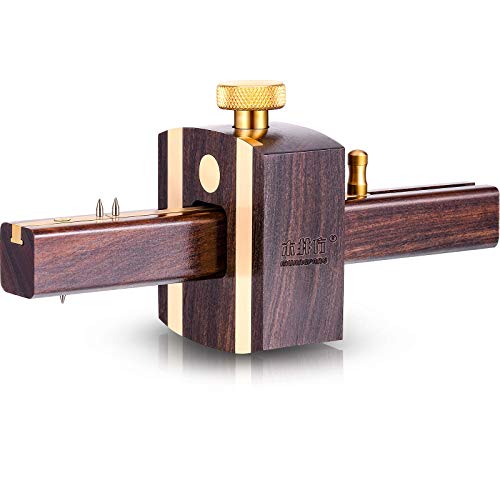 | Best For Beginners | Primary Material: Ebony wood with brass fittings | Marking Mechanism: Double-sided nails (three nails total) | Measurement Range/Capacity: 5.5 to 100 mm needle spacing | VIEW LATEST PRICE | Read Our Analysis |
| Rockler Wheel Marking Gauge – Precision Wood Scribe Tool |  | Professional Grade | Primary Material: Brass body with steel wheel | Marking Mechanism: Retractable steel cutting wheel | Measurement Range/Capacity: Graduated scales in mm and imperial | VIEW LATEST PRICE | Read Our Analysis |
| Saker Woodworking Scriber Marking Ruler with Angle Adjustment | 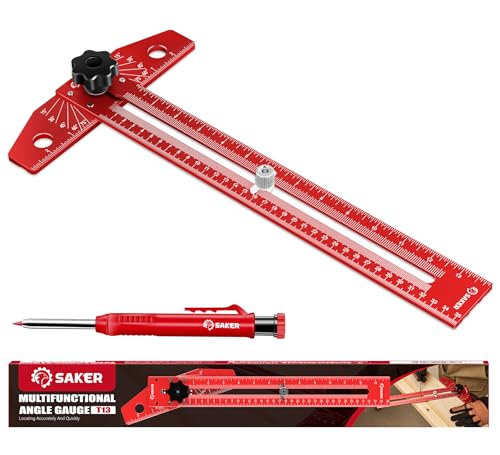 | Most Versatile | Primary Material: Aluminum alloy | Marking Mechanism: Mechanical pencil with angle adjustment | Measurement Range/Capacity: 0–48 cm / 0–18 inches | VIEW LATEST PRICE | Read Our Analysis |
| JessEm Wood Sabre Marking Gauge Woodworking Tool |  | Best Precision | Primary Material: Aluminum (6061) with stainless steel and A2 tool steel | Marking Mechanism: Beveled A2 tool steel blade | Measurement Range/Capacity: 0–6 inch range | VIEW LATEST PRICE | Read Our Analysis |
| YOSELIN Wheel Marking Gauge Woodworking Scribe Tool |  | Best Value | Primary Material: Brass and aluminum alloy | Marking Mechanism: Wheel cutter with dovetail jig design | Measurement Range/Capacity: 8-inch precision grinding bar | VIEW LATEST PRICE | Read Our Analysis |
| Wheel Marking Gauge High Precision Woodworking Scribing Tool |  | Most Accurate | Primary Material: Aluminum alloy with brass components | Marking Mechanism: Rolling wheel blade | Measurement Range/Capacity: Not specified (precise scale display) | VIEW LATEST PRICE | Read Our Analysis |
| Wheel Marking Gauge Woodworking Scribe Tool Adjustable | 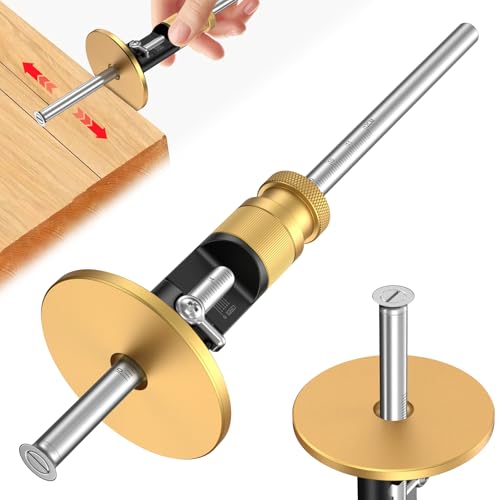 | Best For Dovetails | Primary Material: Aluminum with optional brass | Marking Mechanism: Hard-alloy rolling blade (12 mm) | Measurement Range/Capacity: 0–12 cm adjustable | VIEW LATEST PRICE | Read Our Analysis |
| Kakuri Wood Marking Gauge Japanese Scribe Tool |  | Best Craftsmanship | Primary Material: Bamboo body with Japanese carbon steel blade | Marking Mechanism: Japanese carbon steel blade | Measurement Range/Capacity: 90 mm (3.5 inches) maximum width | VIEW LATEST PRICE | Read Our Analysis |
| KAKURI Wood Marking Gauge Woodworking Tool Japanese |  | Premium Japanese Tool | Primary Material: Bamboo body with Japanese carbon steel blade | Marking Mechanism: Japanese carbon steel blade | Measurement Range/Capacity: 120 mm maximum width | VIEW LATEST PRICE | Read Our Analysis |
More Details on Our Top Picks
Fafeicy Wheel Marking Gauge Woodworking Scriber Tool
If you’re tackling woodworking projects that demand precise measurements and clean lines, the Fafeicy Wheel Marking Gauge stands out as a dependable choice. This European aluminum alloy scriber features metric and inch scales, letting you switch between measurement systems effortlessly. The knurled knob provides stable, non-slip adjustment without hand fatigue, while the wear-resistant aluminum construction resists damage during regular use. You’ll appreciate the fast sliding mechanism for quick repositioning across your workpiece. The tool handles mortise work and parallel scribing effectively, making it versatile for furniture repairs and detailed woodworking tasks. Its clear markings improve work efficiency and reduce measuring errors, though you’ll want to handle it carefully to maintain accuracy.
- Primary Material:Aluminum alloy
- Marking Mechanism:Wheel scriber
- Measurement Range/Capacity:Not specified (metric and inch scales)
- Adjustment Type:Knurled knob
- Scale Markings:Metric and inch scales
- Intended User Level:General woodworkers
- Additional Feature:Knurled knob prevents hand injury
- Additional Feature:Metric and inch scales included
- Additional Feature:High-hardness aluminum alloy construction
Mortise Gauge Woodworking Marking Tool with Brass Adjustable Head
The Mortise Gauge stands out as an essential tool for woodworkers tackling joinery projects and detailed layout work. You’ll appreciate its ebony body paired with brass adjustable fittings, offering solid durability and rust resistance. The double-sided design with three nails lets you draw single or double lines simultaneously, which streamlines your marking process. You can adjust needle spacing from 5.5 to 100 millimeters, adapting to various project requirements. The well-polished surface prevents injury while supporting faster, more accurate work. Whether you’re a DIY enthusiast or experienced carpenter, this 6.4-inch gauge handles scribing, line drawing, and layout work efficiently.
- Primary Material:Ebony wood with brass fittings
- Marking Mechanism:Double-sided nails (three nails total)
- Measurement Range/Capacity:5.5 to 100 mm needle spacing
- Adjustment Type:Brass screw-type adjustable head
- Scale Markings:Pointed tip and fixing screw
- Intended User Level:Amateur DIY and skilled carpenters
- Additional Feature:Double-sided with three nails
- Additional Feature:Adjustable needle spacing 5.5-100mm
- Additional Feature:Fine workmanship, well polished
Rockler Wheel Marking Gauge – Precision Wood Scribe Tool
For woodworkers who need to lay out precise lines without the frustration of wandering marks, Rockler’s Wheel Marking Gauge stands out as a reliable choice. You’ll appreciate its precision-machined brass body paired with a retractable steel cutting wheel that glides smoothly across wood grain. The one-handed operation makes marking repetitive lines effortless during cabinetry or router setup work. Its knurled lock nut keeps your measurement settings secure throughout projects. Graduated scales display both millimeters and imperial measurements for accuracy. The protected steel wheel maintains sharpness longer than typical carpenter tools, making this gauge worth the investment for serious woodworkers tackling frequent workshop tasks.
- Primary Material:Brass body with steel wheel
- Marking Mechanism:Retractable steel cutting wheel
- Measurement Range/Capacity:Graduated scales in mm and imperial
- Adjustment Type:Knurled lock nut
- Scale Markings:Graduated scales in millimeters and imperial
- Intended User Level:Professional woodworkers and daily workshop use
- Additional Feature:One-handed operation capability
- Additional Feature:Retractable steel measurement wheel
- Additional Feature:Wander-free, repeatable marks
Saker Woodworking Scriber Marking Ruler with Angle Adjustment
Woodworkers and designers who need precision angle measurements without juggling multiple tools will appreciate Saker’s combined ruler-and-protractor design. This aluminum alloy scriber features a 0–48 cm range with laser-engraved angle scales for accuracy. The adjustable T-square lets you loosen a nut at your desired position to set bevels, draw radial lines, and mark angles consistently. Its lightweight construction resists deformation while remaining portable. You’ll appreciate the included red mechanical pencil with eight refills, though the tool excels primarily for layout work rather than detailed scribing.
- Primary Material:Aluminum alloy
- Marking Mechanism:Mechanical pencil with angle adjustment
- Measurement Range/Capacity:0–48 cm / 0–18 inches
- Adjustment Type:Loosen nut at desired position
- Scale Markings:Protractor dial with laser-engraved measurements
- Intended User Level:Craftsmen, designers, artists, engineers
- Additional Feature:Protractor dial with angle scale
- Additional Feature:Includes red mechanical pencil
- Additional Feature:Multi-angle scribing functionality
JessEm Wood Sabre Marking Gauge Woodworking Tool
JessEm Wood Sabre Marking Gauge stands out if you’re looking to step up your precision work without compromising on durability or ease of use. This Imperial tool features a beveled A2 steel blade hardened to 60 RC, delivering reliable scoring accuracy across its 0–6 inch range. The 6061 aluminum body with stainless steel components resists corrosion effectively. You’ll appreciate the fine micro-adjuster, which provides 1/16 inch adjustments per revolution for exacting measurements. Laser-engraved markings at half-inch intervals enhance readability. The retracting blade protects both the reference face and your hands during storage, making this gauge a genuinely practical addition to your woodworking toolkit.
- Primary Material:Aluminum (6061) with stainless steel and A2 tool steel
- Marking Mechanism:Beveled A2 tool steel blade
- Measurement Range/Capacity:0–6 inch range
- Adjustment Type:Fine micro-adjuster (1/16 inch per revolution)
- Scale Markings:Laser-engraved markings at 1/2 inch intervals
- Intended User Level:Professional precision users
- Additional Feature:Fine micro-adjuster 1/16 adjustment
- Additional Feature:Retracting blade design safety
- Additional Feature:Hardened A2 tool steel
YOSELIN Wheel Marking Gauge Woodworking Scribe Tool
The Yoselin Wheel Marking Gauge combines precision with accessibility, making it an excellent choice if you’re beginning your woodworking journey or looking for reliable layout tools. This gauge features an 8-inch precision grinding bar with laser-printed metric and imperial scales, offering 1/32-inch and 1mm accuracy per grid. Its brass and aluminum construction, anodized for durability, withstands regular workshop use. The innovative dovetail marking jig wheel design includes a small observation window, letting you verify scale alignment during operation. You’ll appreciate its straightforward operation for scribing, marking guides, and general layout work. Whether you’re marking dados or setting up joints, this tool delivers dependable performance without unnecessary complexity.
- Primary Material:Brass and aluminum alloy
- Marking Mechanism:Wheel cutter with dovetail jig design
- Measurement Range/Capacity:8-inch precision grinding bar
- Adjustment Type:Not specified
- Scale Markings:Laser-printed metric and imperial (1/32 inch and 1 mm accuracy)
- Intended User Level:Beginners and general users
- Additional Feature:Special scale observation window
- Additional Feature:New dovetail marking jig
- Additional Feature:1/32″ and 1mm accuracy
Wheel Marking Gauge High Precision Woodworking Scribing Tool
If you’re tackling carpentry projects that call for accurate layout lines and precise measurements, a Wheel Marking Gauge can really set you apart from less-equipped woodworkers. This tool features an aluminium alloy body with brass components, delivering durability and stability for long-term use. You’ll appreciate its 0.2 mm measurement accuracy, which enables precise scribing and depth measurement simultaneously. The rolling wheel marking blade produces smooth layout lines on wood efficiently, while the ergonomic design guarantees comfortable handling during extended work sessions. Its stable mortise structure supports reliable performance across various carpentry applications.
- Primary Material:Aluminum alloy with brass components
- Marking Mechanism:Rolling wheel blade
- Measurement Range/Capacity:Not specified (precise scale display)
- Adjustment Type:Not specified
- Scale Markings:Precise scale display (0.2 mm accuracy)
- Intended User Level:Beginners and professional carpenters
- Additional Feature:Dual-purpose scribe and measure
- Additional Feature:0.2mm measurement accuracy
- Additional Feature:Stable mortise structure design
Wheel Marking Gauge Woodworking Scribe Tool Adjustable
Woodworkers seeking precision and versatility will find wheel marking gauges an excellent addition to their tool collection. You’ll appreciate the adjustable 0–12 cm range and quick-lock mechanism for efficient workflow. The 12 mm hard-alloy rolling blade creates clean parallel lines perfect for dovetail joints and mortise layouts. Its ergonomic design enables one-handed operation with reduced hand strain. Choose the brass model for 0.2 mm micro-adjustment capability. Whether you’re working with pine or oak, this tool delivers smooth, accurate scribing across all wood types, making it ideal for beginners and professionals alike.
- Primary Material:Aluminum with optional brass
- Marking Mechanism:Hard-alloy rolling blade (12 mm)
- Measurement Range/Capacity:0–12 cm adjustable
- Adjustment Type:Quick-lock mechanism with 0.2 mm micro-adjustment (brass model)
- Scale Markings:Metric and imperial markings
- Intended User Level:Beginners and professional carpenters
- Additional Feature:12mm hard-alloy rolling blade
- Additional Feature:0.2mm micro-adjustment available
- Additional Feature:Quick-lock mechanism operation
Kakuri Wood Marking Gauge Japanese Scribe Tool
For Japanese woodworking enthusiasts and professional carpenters seeking precision marking tools, the Kakuri Wood Marking Gauge delivers exceptional value through three standout qualities: authentic craftsmanship, practical design, and reliable performance. This handcrafted tool features a natural bamboo body with a Japanese carbon steel blade that retracts safely inside when you’re done working. You’ll appreciate the adjustable width mechanism—hand-turnable screws let you set exact distances up to 90mm from your wood’s edge. The lightweight 3.1-ounce construction makes carrying it effortless between jobs. Simply move it along your workpiece’s edge to draw perfectly parallel lines. Its compact dimensions guarantee convenient storage and portability for any workshop environment.
- Primary Material:Bamboo body with Japanese carbon steel blade
- Marking Mechanism:Japanese carbon steel blade
- Measurement Range/Capacity:90 mm (3.5 inches) maximum width
- Adjustment Type:Hand-turnable screws
- Scale Markings:Not specified
- Intended User Level:Professional carpenters
- Additional Feature:Natural bamboo body construction
- Additional Feature:Japanese carbon steel blade
- Additional Feature:Blade stores inside body
KAKURI Wood Marking Gauge Woodworking Tool Japanese
The Kakuri Wood Marking Gauge delivers precision marking when you’re working on carpentry projects that demand clean, parallel lines. This handcrafted Japanese tool features a natural bamboo body paired with a sharp carbon steel blade that you’ll store safely inside. You’ll adjust the width up to 120 millimeters using hand-turnable screws, then slide it smoothly along your wood’s edge. The lightweight design makes it comfortable during extended use, while the accurate marking capability helps you create professional results on furniture, cabinetry, and structural work.
- Primary Material:Bamboo body with Japanese carbon steel blade
- Marking Mechanism:Japanese carbon steel blade
- Measurement Range/Capacity:120 mm maximum width
- Adjustment Type:Hand-turnable screws
- Scale Markings:Not specified
- Intended User Level:Professional carpenters
- Additional Feature:Hand-turnable screw adjustment
- Additional Feature:Maximum width 120mm
- Additional Feature:Natural bamboo lightweight design
Factors to Consider When Choosing Marking Gauges for Accurate Woodworking Lines

When you’re selecting a marking gauge, you’ll want to evaluate several key features that directly affect your line accuracy and work quality. Consider the material durability of the body and beam, the precision of the measurement scale, and whether the blade or wheel design suits your specific projects. You should also assess how well the adjustability mechanism responds to fine-tuning and whether the tool’s grip and weight feel comfortable during extended use.
Material Quality and Durability
Material quality and durability
Investing in marking gauges built from hard, wear-resistant materials like brass, anodized aluminum, or quality hardwoods pays off through years of reliable performance. Metal bodies resist deformation and maintain sliding accuracy better than softer plastics, directly improving your repeatability over time. You’ll notice that hardened tool steel blades and wheels retain sharpness longer, producing cleaner, wander-free lines while reducing frequent blade replacements. Corrosion-resistant finishes—such as anodizing, sealed brass, or stainless fasteners—protect scales and adjustment mechanisms, preserving measurement clarity and smooth operation. Solid construction with tight tolerances minimizes play in the fence or slider, ensuring consistent line distance under pressure. This structural integrity translates to improved accuracy across your woodworking projects, making quality materials a worthwhile investment.
Measurement Scale Accuracy
Once you’ve selected a durable Marking Gauge, paying attention to how you read its scale becomes equally important for consistent woodworking results. You’ll want gauges featuring clearly graduated, laser-engraved scales in both metric and imperial units to minimize parallax error—that visual distortion when you’re viewing the scale at an angle. Check the smallest readable increment, whether that’s 0.5 mm or 1/32 inch, and verify the tool offers fine micro-adjustment capabilities for precise setting. A visible, protected reference window or recessed scale keeps your reading accurate while the gauge is clamped or sliding across wood. Finally, confirm the stated measurement accuracy aligns with your project tolerances, ensuring your joinery and cabinetry work maintains professional quality standards.
Blade or Wheel Design
The type of marking blade or wheel you choose fundamentally shapes how your layout lines appear and perform across different woodworking tasks. Cutting-wheel designs deliver consistent, wander-free scribe lines both across and with the grain, making them excellent for repeatable layouts and router setups. Knife or pin blades score crisp, single-line cuts that resist smudging and provide precise references for joinery like dovetails or mortises. Wider blade profiles—typically 8–12 mm rolling blades—create bolder guide lines for visual alignment, while narrower blades offer finer, more exact marks. Hardened steel or carbide-tipped blades retain sharpness longer and require less frequent replacement than softer metals. Retractable designs prevent blade damage during storage, and micro-adjustable mounts allow sub-millimeter tuning for accurate line positioning.
Adjustability and Precision Control
While blade sharpness and design determine how your mark appears, the gauge’s adjustability mechanisms determine whether you can reliably reproduce that mark time after time. Look for fine micro-adjustment capabilities—ideally 0.2 mm or 1/32″ increments—that let you make small, repeatable changes. A vernier-style mechanism provides precise control without fumbling. Clear dual metric and imperial scales with a visible reference window help you set measurements quickly and verify them accurately. Locking mechanisms like knurled knobs or lock nuts prevent slippage during use, maintaining your set distance consistently. Minimal beam play, achieved through tight dovetail slides or precision-machined surfaces, guarantees adjustments translate directly to your scribe without backlash, eliminating frustrating inconsistencies in your marking lines.
Ergonomic Handling and Comfort
Ergonomic handling and comfort
You’ll spend considerable time holding your marking gauge, so comfort during those extended sessions directly affects both your accuracy and your willingness to use the tool regularly. A grip diameter around 20–30 mm with rounded edges markedly reduces hand fatigue over hours of work. Textured or knurled adjustment knobs let you make precise settings one-handed without the tool slipping in your palm. The tool’s weight matters too; a moderately weighted body glides smoothly across wood while preventing wrist strain that heavier designs cause. Additionally, make certain the reference fence and faces are smooth and well-finished. These polished surfaces maintain consistent contact against your workpiece, delivering repeatable marking lines without creating uncomfortable pressure points.
Conclusion
You’ve now got the roadmap to finding your perfect marking gauge. Whether you’re drawn to wheel designs for curved lines, mortise gauges for precision joints, or Japanese-style tools for traditional work, each option brings distinct advantages. Your choice hinges on project type, budget, and personal preference. Test a few models—they’re like different brushstrokes in your woodworking masterpiece, each creating unique results worth exploring.