

You’ll find reliable outlet testers ranging from simple plug-in models like the Power Gear 50542 to advanced kits combining GFCI testing and circuit breaker location.
Top options include Klein Tools’ RT110 for basic wiring diagnostics, the ET310 for breaker identification, and two-in-one systems like HUEPAR’s SK3001 that detect voltage without contact.
Each tester offers distinct advantages: LED indicators for quick problem identification, LCD readouts for precise measurements, or portability for multi-room checks.
Choosing depends on your specific needs—basic diagnostics, GFCI verification, or all-encompassing testing.
The right selection hinges on understanding each model’s capabilities and limitations.
| Power Gear Receptacle Tester Circuit Analyzer (50542) | 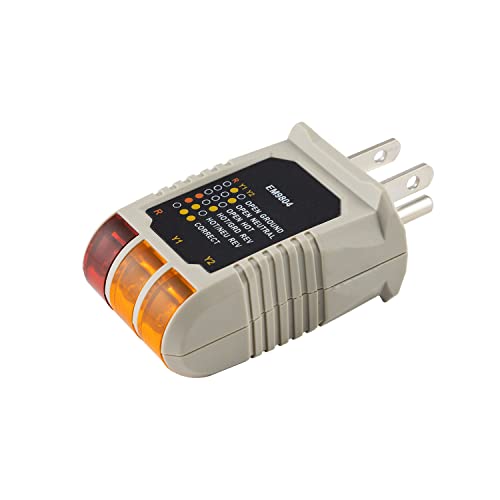 | Best Overall | Primary Testing Function: Standard 3-wire outlet wiring detection | Display Type: 6 visual LED indicators | Voltage Range: 110–125 VAC (100–125 VAC) | VIEW LATEST PRICE | Read Our Analysis |
| Klein Tools RT110 Outlet Tester for AC Receptacles |  | Best Value | Primary Testing Function: Standard 3-wire receptacle wiring detection | Display Type: Clear light sequence indicators | Voltage Range: 110/125V AC, 50/60 Hz | VIEW LATEST PRICE | Read Our Analysis |
| Gardner Bender GTK-2 Safety Kit with Voltage Tester |  | Best Safety Kit | Primary Testing Function: Non-contact voltage detection + GFCI outlet testing | Display Type: Visual and audible indicators (voltage tester); indicating lamps (GFCI tester) | Voltage Range: 50–600V AC (non-contact); standard outlets (GFCI tester) | VIEW LATEST PRICE | Read Our Analysis |
| Klein Tools Outlet Tester Kit with GFCI Tester |  | Most Versatile | Primary Testing Function: Standard/GFCI receptacle testing + non-contact voltage detection | Display Type: High-intensity LED indicators (green/red) with warning tone | Voltage Range: Standard/GFCI receptacles; non-contact 50–600V detection | VIEW LATEST PRICE | Read Our Analysis |
| Klein Tools ET310 AC Circuit Breaker Finder & Tester | 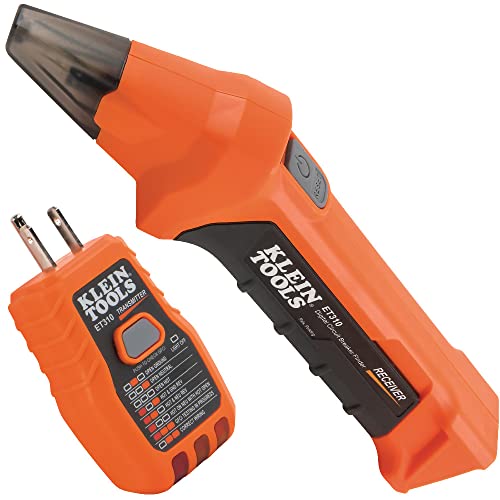 | Best Circuit Finder | Primary Testing Function: Circuit breaker identification + GFCI outlet testing | Display Type: Visual and audible cues | Voltage Range: 90–120V AC circuits | VIEW LATEST PRICE | Read Our Analysis |
| Klein Tools RT250 GFCI Outlet Tester with LCD Display |  | Best Advanced Features | Primary Testing Function: GFCI outlet testing with LCD display | Display Type: Large backlit LCD display with LED indicators | Voltage Range: 120V standard 3-wire receptacles | VIEW LATEST PRICE | Read Our Analysis |
| KAIWEETS Electrical Test Kit with Voltage Tester |  | Professional Grade | Primary Testing Function: Non-contact voltage detection + GFCI outlet testing | Display Type: Bright LCD display with red/green LEDs and audible alerts | Voltage Range: 12–1000V AC (dual sensitivity ranges) | VIEW LATEST PRICE | Read Our Analysis |
| Klein Tools RT210 Outlet Tester for AC Electrical Outlets | 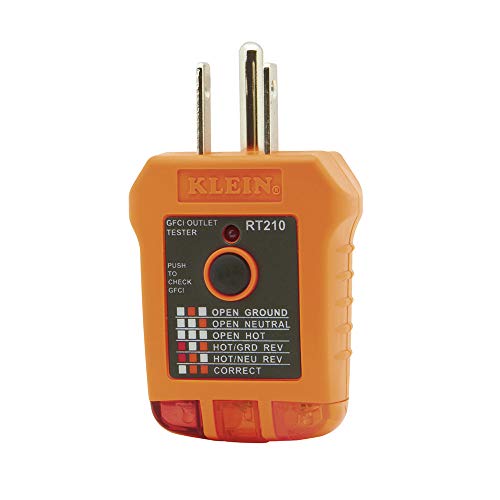 | Best Budget Pick | Primary Testing Function: Standard/GFCI receptacle wiring detection | Display Type: Convenient chart on tester with light indicators | Voltage Range: 110/125V AC, 50/60 Hz, 3-wire outlets | VIEW LATEST PRICE | Read Our Analysis |
| KAIWEETS Circuit Breaker Finder with LCD Display (KT301P) |  | Best All-in-One | Primary Testing Function: Circuit breaker finder + outlet/GFCI testing with LCD | Display Type: Large backlit LCD screen with red/green LED indicators | Voltage Range: 30–150V AC, 50/60 Hz | VIEW LATEST PRICE | Read Our Analysis |
| HUEPAR 2-in-1 NCV GFCI Outlet Tester (SK3001) |  | Best Compact Design | Primary Testing Function: Non-contact voltage detection + GFCI outlet testing | Display Type: LCD display with hold function and auto-hold | Voltage Range: 30–150V AC, 50/60 Hz | VIEW LATEST PRICE | Read Our Analysis |
More Details on Our Top Picks
Power Gear Receptacle Tester Circuit Analyzer (50542)
If you’re a homeowner or DIY electrician who needs quick outlet diagnostics, the Power Gear Receptacle Tester (50542) delivers straightforward problem-detection without complexity. This compact gray tester plugs directly into standard 110-125 VAC outlets, displaying six visual LED patterns that identify common wiring issues. The included indicator chart makes interpretation simple—you’ll instantly recognize whether your outlet’s properly grounded or has reversed wires. Weighing just 1.76 ounces, it’s conveniently portable for checking multiple rooms. However, note that it won’t assess ground quality or detect certain conductor reversals. With 4.7-star ratings from over 1,600 users and ETL listing certification, this tester offers reliable basic diagnostics for residential electrical safety checks.
- Primary Testing Function:Standard 3-wire outlet wiring detection
- Display Type:6 visual LED indicators
- Voltage Range:110–125 VAC (100–125 VAC)
- Wiring Faults Detected:6 probable wiring conditions
- Power Source/Batteries:Corded electric; no batteries required
- Safety Certification/Rating:ETL Listed
- Additional Feature:6 visual LED test patterns
- Additional Feature:Included indicator chart included
- Additional Feature:Compact 5.5 x 2.75 inches
Klein Tools RT110 Outlet Tester for AC Receptacles
The Klein Tools RT110 Outlet Tester stands out as your go-to device when you need to pin down wiring problems in standard three-wire receptacles. This tester uses a clear light sequence to show you whether your outlet’s wiring is correct or faulty. It detects common issues like reversed polarity and missing ground connections quickly. The unit works with standard 110/125V AC outlets at 50/60 Hz frequencies found throughout North America. You’ll appreciate its reliability and ease of use for identifying potential electrical hazards. It’s UL and CSA certified, meaning it meets rigorous safety standards. The tester’s rugged construction withstands drops from 6.6 feet, and it operates dependably between 32°F and 140°F, making it practical for various work environments and conditions.
- Primary Testing Function:Standard 3-wire receptacle wiring detection
- Display Type:Clear light sequence indicators
- Voltage Range:110/125V AC, 50/60 Hz
- Wiring Faults Detected:Common wiring problems in 3-wire receptacles
- Power Source/Batteries:Corded electric (outlet-powered); no batteries
- Safety Certification/Rating:UL Std 1436 and CSA Std C22.2 #160
- Additional Feature:Withstands 6.6-foot drop
- Additional Feature:Operates 32°F to 140°F
- Additional Feature:UL Std 1436 compliant
Gardner Bender GTK-2 Safety Kit with Voltage Tester
Homeowners and electricians tackling basic electrical diagnostics will find Gardner Bender’s GTK-2 Safety Kit particularly useful for quick, reliable testing. This two-piece kit combines a non-contact voltage tester and a GFCI outlet tester for thorough electrical checks. The voltage tester detects AC current from 50–600 volts with visual and audible alerts, while the outlet tester’s indicator lamps identify five common wiring problems. Both tools feature portable, user-friendly designs with pocket clips for convenience. Made in the USA, this affordable kit delivers superior quality for homeowners performing basic safety inspections without professional equipment costs.
- Primary Testing Function:Non-contact voltage detection + GFCI outlet testing
- Display Type:Visual and audible indicators (voltage tester); indicating lamps (GFCI tester)
- Voltage Range:50–600V AC (non-contact); standard outlets (GFCI tester)
- Wiring Faults Detected:Five common wiring errors (GFCI tester)
- Power Source/Batteries:Battery-powered (voltage tester); corded (GFCI tester)
- Safety Certification/Rating:Standard compliance (specific ratings not listed for kit)
- Additional Feature:2-piece kit included
- Additional Feature:Made in the USA
- Additional Feature:Senses AC voltage 50-600V
Klein Tools Outlet Tester Kit with GFCI Tester
For electricians and DIY enthusiasts who need reliable diagnostics in one convenient package, Klein Tools’ 80025 Outlet Tester Kit delivers solid performance. This two-piece set combines a GFCI tester and non-contact voltage tester pen for thorough outlet checking. You’ll detect common wiring problems in standard and GFCI receptacles while confirming proper ground-fault protection operation. The non-contact pen identifies voltage in cables, circuit breakers, and fixtures without direct contact. Bright LED indicators provide clear status feedback—green for operational, red with warning tone for voltage detection. The digitally controlled power button assures convenient operation, while the compact design makes fieldwork manageable and efficient for most electrical diagnostics.
- Primary Testing Function:Standard/GFCI receptacle testing + non-contact voltage detection
- Display Type:High-intensity LED indicators (green/red) with warning tone
- Voltage Range:Standard/GFCI receptacles; non-contact 50–600V detection
- Wiring Faults Detected:Common wiring problems in standard/GFCI receptacles
- Power Source/Batteries:Battery-powered (non-contact pen); corded (GFCI tester)
- Safety Certification/Rating:No specific rating listed
- Additional Feature:2-piece complete kit
- Additional Feature:High-intensity green LED
- Additional Feature:Compact portable field kit
Klein Tools ET310 AC Circuit Breaker Finder & Tester
Klein Tools ET310 AC Circuit Breaker Finder & Tester stands out as your ideal solution if you’re tired of guessing which breaker controls a specific outlet or fixture. This two-part system works by plugging the transmitter into an outlet, then scanning your breaker panel with the receiver until it locates the correct breaker. You’ll get clear visual and audible signals confirming the match. The transmitter also includes a built-in GFCI tester, letting you inspect wiring conditions and verify GFCI device functionality. It operates on standard 90–120V AC circuits and features a universal three-pin plug for North American outlets. The compact design lets you dock components together for convenient storage.
- Primary Testing Function:Circuit breaker identification + GFCI outlet testing
- Display Type:Visual and audible cues
- Voltage Range:90–120V AC circuits
- Wiring Faults Detected:Wiring conditions via GFCI outlet tester
- Power Source/Batteries:Corded electric (transmitter); battery-powered (receiver)
- Safety Certification/Rating:No specific rating listed
- Additional Feature:Two-part transmitter/receiver system
- Additional Feature:Transmitter docks for storage
- Additional Feature:Visual and audible cues
Klein Tools RT250 GFCI Outlet Tester with LCD Display
Electricians and DIY troubleshooters who need reliable fault detection should consider the Klein Tools RT250 GFCI Outlet Tester with LCD display. This device quickly identifies wiring problems in standard 120V receptacles through its large backlit screen and visible LED indicators. You’ll appreciate the patent-pending Open Neutral and Open Ground detection features, which catch hard-to-spot faults. The Auto-Hold function keeps readings steady for difficult-to-reach outlets, while the LCD displays actual GFCI trip times. With its CAT II 135V safety rating, you’re protected during testing. This tester streamlines troubleshooting and guarantees receptacles function safely and correctly.
- Primary Testing Function:GFCI outlet testing with LCD display
- Display Type:Large backlit LCD display with LED indicators
- Voltage Range:120V standard 3-wire receptacles
- Wiring Faults Detected:Common wiring faults with open neutral/open ground detection
- Power Source/Batteries:Corded electric (outlet-powered); no batteries
- Safety Certification/Rating:CAT II 135V
- Additional Feature:Patent-pending Open Neutral detection
- Additional Feature:Auto-Hold function included
- Additional Feature:Large backlit LCD display
KAIWEETS Electrical Test Kit with Voltage Tester
The KAIWEETS Electrical Test Kit combines two specialized testers that’ll help you confidently tackle electrical diagnostics whether you’re a seasoned electrician, weekend DIYer, or homeowner addressing outlet problems. The non-contact voltage tester identifies live wires and measures voltage intensity across dual sensitivity ranges using a bright LCD display with visual and audio alerts. Meanwhile, the GFCI outlet tester verifies proper wiring and tests ground-fault protection with real-time readings and status icons. Both tools meet rigorous safety standards and feature compact designs for accessing tight spaces. You’ll appreciate the auto shut-off and low-battery indicators that extend usability. The included 3-year warranty and round-the-clock support provide reliable backup, making this kit a practical investment for serious electrical troubleshooting.
- Primary Testing Function:Non-contact voltage detection + GFCI outlet testing
- Display Type:Bright LCD display with red/green LEDs and audible alerts
- Voltage Range:12–1000V AC (dual sensitivity ranges)
- Wiring Faults Detected:Common wiring faults identification
- Power Source/Batteries:Battery-powered (2 AAA batteries; auto shut-off)
- Safety Certification/Rating:IEC CAT III 1000V / CAT IV 600V (voltage tester); CAT II 135V (GFCI tester)
- Additional Feature:3-year warranty included
- Additional Feature:Built-in flashlight feature
- Additional Feature:24/7 after-sales service
Klein Tools RT210 Outlet Tester for AC Electrical Outlets
For homeowners and maintenance professionals looking to quickly identify common wiring faults, the Klein Tools RT210 stands out as a dependable choice that doesn’t require batteries or complicated setup. This outlet tester detects five common wiring problems: open ground, reverse polarity, open hot, open neutral, and hot/ground reversed issues. The device includes a convenient light-based chart that indicates your outlet’s condition instantly. It’s also compatible with GFCI outlets, allowing you to verify those safety devices function properly. With a 4.8-star rating from thousands of users and Klein Tools’ solid 2-year warranty backing it, you’re getting reliable electrical testing for standard North American outlets.
- Primary Testing Function:Standard/GFCI receptacle wiring detection
- Display Type:Convenient chart on tester with light indicators
- Voltage Range:110/125V AC, 50/60 Hz, 3-wire outlets
- Wiring Faults Detected:Open ground, reverse polarity, open hot, open neutral, hot/ground reversed
- Power Source/Batteries:Corded electric; no batteries required
- Safety Certification/Rating:Cat II 300V
- Additional Feature:Detects five wiring faults
- Additional Feature:Withstands 6.6-foot drop
- Additional Feature:4.8 star rating (8,780)
KAIWEETS Circuit Breaker Finder with LCD Display (KT301P)
DIYers and maintenance professionals tackling electrical diagnostics will appreciate how this all-in-one device streamlines troubleshooting across residential and commercial settings. You’ll find it identifies circuit breakers, tests outlets, and checks GFCI protection simultaneously. The large backlit LCD displays voltage readings from 30–150V and pinpoints seven common wiring faults clearly. Its transmitter functions as both outlet tester and GFCI unit with automatic trip detection. The receiver includes non-contact voltage testing for safely detecting live circuits without direct contact. Red and green LED indicators provide instant visual feedback. You’ll also get convenient adapters—3-prong to 2-prong, light socket, and alligator clips—plus a carrying case for portability.
- Primary Testing Function:Circuit breaker finder + outlet/GFCI testing with LCD
- Display Type:Large backlit LCD screen with red/green LED indicators
- Voltage Range:30–150V AC, 50/60 Hz
- Wiring Faults Detected:7 common wiring faults
- Power Source/Batteries:Corded (transmitter); battery-powered (receiver with LCD)
- Safety Certification/Rating:No specific rating listed
- Additional Feature:Durable carrying case included
- Additional Feature:Three adapter accessories included
- Additional Feature:Diagnoses seven wiring faults
HUEPAR 2-in-1 NCV GFCI Outlet Tester (SK3001)
Homeowners and electricians who need both outlet testing and voltage detection capabilities will find the HUEPAR SK3001 a practical dual-function tool. This device combines a receptacle tester with non-contact voltage detection, identifying six common wiring faults like reversed hot/neutral connections and open grounds. The LCD display with hold function lets you lock measurements for review in dim areas. Operating reliably between 32°F and 104°F, it handles varied job site conditions. You’ll appreciate the included batteries and screwdriver, plus the straightforward 12-month warranty covering replacements through Amazon contact.
- Primary Testing Function:Non-contact voltage detection + GFCI outlet testing
- Display Type:LCD display with hold function and auto-hold
- Voltage Range:30–150V AC, 50/60 Hz
- Wiring Faults Detected:6 common faults (open hot/neutral/ground, dual faults, reversals)
- Power Source/Batteries:Battery-powered (2 AAA alkaline batteries included)
- Safety Certification/Rating:CAT II 135V
- Additional Feature:Non-contact voltage detection included
- Additional Feature:Hold function locks measurements
- Additional Feature:12-month replacement warranty
Factors to Consider When Choosing Outlet Testers for Diagnosing Electrical Problems Quickly

When you’re selecting an outlet tester, you’ll want to take into account how its voltage range, display type, and wiring fault detection capabilities match your specific diagnostic needs. Features like GFCI testing functionality let you verify ground fault protection, while portability and durability standards determine whether you can rely on the tool across different job sites and conditions. Balancing these factors helps you choose a tester that catches electrical problems accurately without slowing down your work.
Voltage Range Compatibility
Voltage Range Compatibility
Since electrical systems operate at different voltage levels depending on location and application, your outlet tester must support the specific voltages you’ll encounter. North American residential outlets typically require testers rated for 110–125 VAC, while commercial and industrial environments demand higher-voltage compatibility, often 50–600 V or beyond.
Check your tester’s minimum operating voltage specification because some models need at least 110 VAC to deliver accurate readings. Lower-voltage or degraded circuits may not trigger proper detection on incompatible devices.
For combined testers offering both non-contact voltage (NCV) detection and outlet diagnostics, verify the NCV sensitivity and detection range—examples include 30–150 V or dual-range 12–1000 V capabilities. Additionally, confirm the safety category rating (CAT II, III, or IV) since it indicates both maximum working voltage and suitability for your specific installation type.
Display Type and Readability
Display type and readability
You’ll frequently encounter dimly lit crawlspaces, outdoor installations, and dusty job sites where a tester’s display becomes your only source of diagnostic information. Numeric LCD readouts give you precise voltage measurements rather than simple pass/fail indicators, helping you diagnose undervoltage or floating-neutral problems faster. Color-coded LEDs—typically green for safe and red for problems—paired with a printed decoding chart reduce interpretation errors significantly. Look for large, high-contrast characters and auto-hold features that improve readability when accessing hard-to-reach outlets or when your vision’s limited. Durable, glare-resistant displays and tactile controls guarantee consistent performance in bright sunlight or while wearing work gloves. These display features transform your tester from a basic tool into a reliable diagnostic instrument across varied jobsite conditions.
Wiring Fault Detection Capabilities
A readable display tells you voltage is present, but it won’t reveal *what’s* wrong with the wiring itself. That’s where fault detection capabilities come in. You’ll want a tester that identifies the five common 3-wire receptacle problems: open hot, open neutral, open ground, reversed hot/neutral, and hot/ground reversal. Look for devices using distinct visual indicators—like specific LED patterns or light combinations—paired with a reference chart for quick interpretation. Many quality testers also include GFCI test functions, letting you verify both wiring conditions and ground-fault protective device operation simultaneously. Some models provide voltage readouts alongside fault identification, helping you distinguish actual wiring mistakes from supply problems. Keep in mind that plug-in testers can’t assess ground quality or neutral continuity under load, so you’ll need complementary tools for thorough diagnostics.
GFCI Testing Functionality
When you’re checking outlet safety, testing the GFCI device itself matters just as much as testing the wiring. A true GFCI tester should trip and reset the device while reporting trip time, which verifies the device’s sensing and interruption function rather than just confirming wiring presence.
Look for testers that identify both correct GFCI operation and common wiring faults like open neutrals or reversed hot/ground connections. This distinction helps you determine whether a problem stems from device failure or miswiring.
Quality testers inject calibrated imbalance around 5–30 mA to guarantee the GFCI trips within its specified threshold and time. Built-in trip-time displays help with compliance checks since many codes require specific trip times at given fault currents. Always verify the tester matches your outlet voltage and safety category rating.
Portability and Durability Standards
Durability and portability go hand-in-hand when you’re selecting an outlet tester for consistent jobsite use. You’ll want a model rated for at least a 2-meter drop to survive inevitable impacts and reduce replacement costs. Compact, lightweight designs—roughly 1 to 3 ounces—fit easily in tool belts without causing fatigue during repeated checks throughout your workday. Integrated storage or included protective cases shield probes and accessories from moisture, dust, and abrasion during transport. Battery efficiency matters too; choose models with long-lasting batteries or battery-free operation so you’re never caught unprepared. Finally, verify operating temperature and humidity ranges—typically 0–40°C and up to 70% relative humidity—ensuring reliable performance across varying jobsite conditions and seasons.
Safety Ratings and Certifications
Before you invest in an Outlet Tester, understanding safety ratings and certifications becomes absolutely critical to protect yourself and make certain accurate diagnostics. Look for CAT (Category) ratings—CAT II, CAT III, or CAT IV—which define maximum transient overvoltage your tester can safely withstand in specific environments. CAT II applies to household receptacles, while CAT III covers distribution panels. You’ll also want third-party certifications like UL, CSA, or IEC approval, since these verify your device met standardized safety and performance tests. Check the maximum rated voltage matches your typical circuits, whether that’s 125 VAC for basic outlets or 600 V for commercial applications. These certifications and ratings directly impact your safety during fieldwork.
Additional Features and Accessories
Once you’ve narrowed down your safety ratings and certifications, the extra features and accessories can really set apart a truly useful Outlet Tester from a basic one. Look for models with built-in GFCI test functions that let you verify ground-fault protection without needing separate equipment. Non-contact voltage detection helps you quickly identify live wires nearby while minimizing direct contact risks. Backlit LCD displays with Auto-Hold features make readings easier in dim spaces. Consider kits that include adapters—3-prong-to-2-prong converters, light-socket adapters, and alligator clips—which expand compatibility across different outlets and fixtures. Clear visual indicators like multi-LED patterns and audible tones, paired with on-device wiring guides, help you interpret results faster and reduce diagnostic errors markedly.
Operating Temperature Range Requirements
Operating temperature range requirements
Since you’ll likely use your outlet tester in various environments—from basement workshops to outdoor electrical boxes—the operating temperature range becomes a critical selection factor. Most handheld testers operate reliably between 0–40°C (32–140°F), but you should verify this specification before purchasing.
Using testers outside their rated temperatures causes real problems. Cold conditions slow electronic displays and freeze buttons, while excessive heat degrades LEDs, batteries, and internal circuits. For outdoor or unheated-space work, choose a tester rated for freezing temperatures (≤0°C / 32°F) and check accompanying humidity limits.
Don’t overlook storage temperature ranges, which often differ from operating ranges and prevent calibration drift. Battery performance also suffers in cold conditions, so plan for reduced runtime or store batteries separately in warmer locations during winter jobs.
Conclusion
You’ll find that choosing the right outlet tester depends on your specific needs, budget, and technical skill level. Whether you’re selecting a basic Receptacle Tester, investing in a thorough kit, or opting for advanced Circuit Breaker Detection, you’re making a practical investment in your home’s electrical safety. Each option offers distinct advantages; consider your priorities carefully, weigh the features against costs, and you’ll confidently diagnose electrical problems efficiently.