
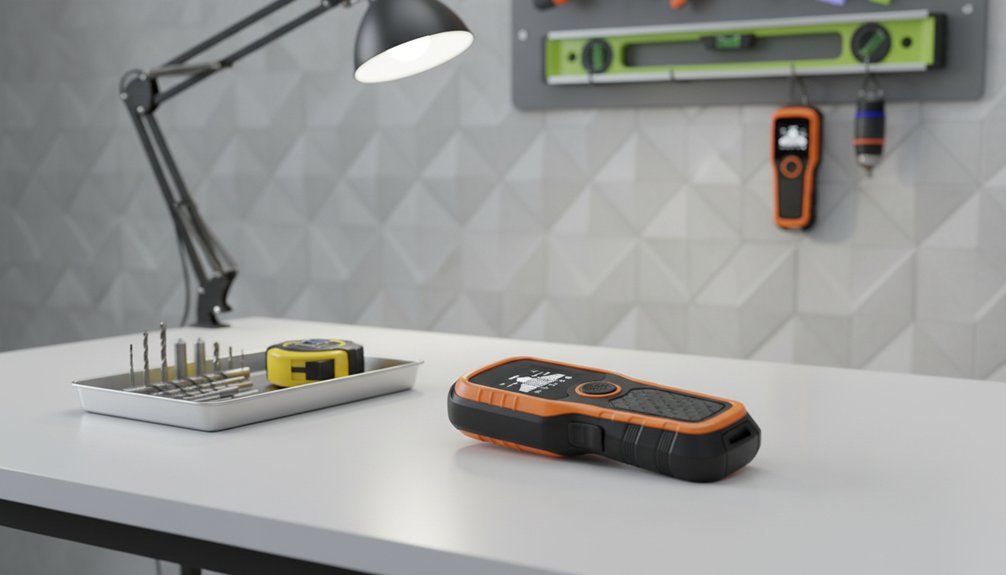
You’ll find these 8 top pipe detectors for wall inspection in 2026 use electromagnetic, acoustic, and capacitive tech to locate leaks, blockages, and studs behind drywall or concrete.
Models like the Stud Finder 5-in-1 and WPP123 scan for wood, metal, and live wires, while the VEVOR 100ft Locator traces underground lines with signal lines and adjustable sensitivity.
Devices like the Water Leakage Detector amplify faint pipe sounds, ideal for wet areas.
Pipe Blockage Detectors use waterproof probes and EM signals for deep detection in PVC or metal pipes.
Some struggle with reinforced concrete or high-interference zones.
Calibrate correctly, adjust sensitivity stepwise, and use headphones in noisy spaces.
Each balances depth, accuracy, and ease of use across different materials.
Clear feedback via LCD, LED, or audio helps prevent costly mistakes.
Strong IP67-rated probes and USB power boost field reliability.
The best pick depends on your specific task, material, and environment.
You’ll see how each model stands out when you compare their real-world performance.
| Stud Finder Wall Scanner 5-in-1 |  | Best Overall | Detection Principle: Micro-sensor chip | Waterproofing: Not specified | Signal Range / Line Length: Not applicable | VIEW LATEST PRICE | Read Our Analysis |
| Water Leakage Detector with Sensitive Listening Device |  | Best for Leak Detection | Detection Principle: Sound amplification | Waterproofing: Not specified | Signal Range / Line Length: Not specified | VIEW LATEST PRICE | Read Our Analysis |
| Pipe Locator for Underground Water Pipes (100ft) |  | Professional Grade | Detection Principle: Electromagnetic induction | Waterproofing: IP67 (probe) | Signal Range / Line Length: 100 ft / 30 m | VIEW LATEST PRICE | Read Our Analysis |
| Pipe Blockage Detector for Water Pipes (20M) |  | Best Value | Detection Principle: Electromagnetic induction | Waterproofing: IP67 (probe) | Signal Range / Line Length: 20 m | VIEW LATEST PRICE | Read Our Analysis |
| VEVOR 100ft Pipe Locator with Adjustable Sensitivity |  | Most Popular | Detection Principle: Electromagnetic induction | Waterproofing: IP67 | Signal Range / Line Length: 100 ft / 30 m | VIEW LATEST PRICE | Read Our Analysis |
| WPP123 Wall Scanner & Metal Detector |  | Budget-Friendly Pick | Detection Principle: High-sensitivity sensor | Waterproofing: Not specified | Signal Range / Line Length: Not specified | VIEW LATEST PRICE | Read Our Analysis |
| Pipe Blockage Detector for Water Pipes | 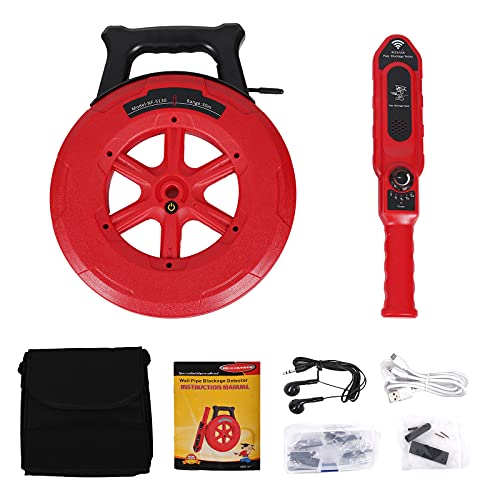 | Editor’s Choice | Detection Principle: Electromagnetic induction | Waterproofing: Waterproof probe | Signal Range / Line Length: 30 m | VIEW LATEST PRICE | Read Our Analysis |
| Pipe Locator for Underground Water Pipes (100ft) | | Best for Deep Detection | Detection Principle: Electromagnetic induction | Waterproofing: Waterproof probe (ABS) | Signal Range / Line Length: 100 ft / 30 m | VIEW LATEST PRICE | Read Our Analysis |
More Details on Our Top Picks
Stud Finder Wall Scanner 5-in-1
If you’re a DIYer or pro who regularly tackles wall projects, the Stud Finder Wall Scanner 5-in-1 rises to the challenge with reliable detection for wood studs, metal pipes, and live wires—making it a go-to tool for safely mounting shelves or installing fixtures. You’ll appreciate its smart sensor chip that quickly finds stud edges and centers, plus live wires with visual and audible alarms. It offers multiple scan modes tailored to different depths and materials, and the backlit LCD gives clear feedback, even in dark spaces. Just remember to calibrate it properly on flat walls, avoid electromagnetic interference, and remove the battery when storing—it’s small stuff, but it keeps the tool sharp and safe for your next job.
- Detection Principle:Micro-sensor chip
- Waterproofing:Not specified
- Signal Range / Line Length:Not applicable
- Power Source:Battery (non-rechargeable)
- Charging Method:Not rechargeable
- Probe Replaceability:Not applicable
- Additional Feature:Multi-scan modes (5)
- Additional Feature:Live wire alert system
- Additional Feature:Backlit LCD display
Water Leakage Detector with Sensitive Listening Device
You’ll get the most out of this Water Leakage Detector if you’re a homeowner dealing with hidden leaks in walls, under slabs, or behind tiles—especially when even small drips cost you in water bills or cause mold. You can quickly pinpoint leaks in pipes hidden behind cement, steel, or underground using its high-sensitivity sound intensifier. The device amplifies faint water sounds wirelessly, and with the included earphone, you hear every detail clearly. Volume is adjustable, protecting your ears while boosting accuracy. It’s simple to use, no pro skills needed, and works great in bathrooms, kitchens, basements, or laundry rooms. While it won’t detect non-water leaks, it excels at finding water-related pipe issues fast.
- Detection Principle:Sound amplification
- Waterproofing:Not specified
- Signal Range / Line Length:Not specified
- Power Source:Not specified
- Charging Method:Not specified
- Probe Replaceability:Not specified
- Additional Feature:Wireless sound amplification
- Additional Feature:Includes earphone for precision
- Additional Feature:High-sensitivity leak detection
Pipe Locator for Underground Water Pipes (100ft)
Pipe Locator for Underground Water Pipes (100ft)
Pinpoint blockages in underground water pipes up to 100 feet with this Pipe Locator, ideal for plumbers and DIYers tackling hidden clogs in PVC or metal lines. You’ll use electromagnetic induction to detect blockages, adjusting sensitivity for accuracy within 0.5 inches. The 100 ft signal line reaches deep into sewer lines, while the waterproof ABS probe resists scratches, corrosion, and pressure. It finds non-metallic pipes up to 38 cm deep and metal ones up to 13 cm. Charge easily via USB—two cables are included. Avoid reinforced concrete or high-magnetic areas, where interference can occur. Great for buried PVC drains or open sewer networks. Comes with headphones, eight probe accessories, receiver, transmitter, and storage bag.
- Detection Principle:Electromagnetic induction
- Waterproofing:IP67 (probe)
- Signal Range / Line Length:100 ft / 30 m
- Power Source:Built-in lithium battery
- Charging Method:USB charging
- Probe Replaceability:Yes (8 spare probes)
- Additional Feature:Scratch-resistant ABS probe
- Additional Feature:0.5-inch max error margin
- Additional Feature:Works in pressurized pipelines
Pipe Blockage Detector for Water Pipes (20M)
The Pipe Blockage Detector for water pipes (20M) shines when you’re dealing with stubborn clogs hidden behind walls or underground, making it a go-to tool for plumbers and DIYers who need fast, reliable results. You’ll love its wireless probe with an audible buzzer that confirms blockages instantly. With IP67 waterproofing and a 20-meter signal line, it handles wet pipes and deep runs without fuss. Adjust the receiver’s sensitivity to narrow in on clogs—start high, then fine-tune. It runs 12 hours on a USB-rechargeable battery, so you won’t stall mid-job. Includes headphones, eight probe tips, and a storage bag for clean, organized work.
- Detection Principle:Electromagnetic induction
- Waterproofing:IP67 (probe)
- Signal Range / Line Length:20 m
- Power Source:Built-in 2000 mAh lithium
- Charging Method:USB-chargeable
- Probe Replaceability:Yes (8 probe accessories)
- Additional Feature:12-hour battery runtime
- Additional Feature:Audible buzzer on probe
- Additional Feature:Coarse-to-fine sensitivity control
VEVOR 100ft Pipe Locator with Adjustable Sensitivity
Built for both DIYers and construction pros, this locator excels in finding hidden pipes and blockages behind walls using electromagnetic induction. You’ll rely on its 100ft signal line to trace non-metal pipes up to 40 cm deep or metal ones up to 15 cm. It uses replaceable, waterproof probes—8 are included—so you’re ready for wet or dry runs. Just remember: tight bends or narrow pipes can snag the cable, especially past 15–23 inches. Adjust sensitivity to sweep wide or zero in on clogs. With IP67 rating, USB or battery power, and 5–10 hours of runtime, it’s tough, flexible, and ready when you are.
- Detection Principle:Electromagnetic induction
- Waterproofing:IP67
- Signal Range / Line Length:100 ft / 30 m
- Power Source:Built-in lithium battery
- Charging Method:USB and direct lithium charging
- Probe Replaceability:Yes (8 spare waterproof probes)
- Additional Feature:10-hour transmitter runtime
- Additional Feature:Replaceable waterproof probes (8)
- Additional Feature:Green low-battery indicator
WPP123 Wall Scanner & Metal Detector
You’ll find the WPP123 Wall Scanner & Metal Detector especially useful if you’re tackling home renovations or handling construction tasks where accuracy matters. It’s a 3-in-1 tool that finds studs, metal, and live AC wires behind walls, drywall, plaster, or concrete. You’ll appreciate the dual sound and LED alerts—they help in loud or dark spaces. Just calibrate it first for better results. Adjust the sensitivity based on wall thickness or material to avoid false hits. The lightweight, black plastic design fits comfortably in hand, reducing fatigue during long scans. While it won’t replace a dedicated pipe locator, it’s a solid, reliable pick for DIYers and pros who want quick, on-the-spot detection without switching tools.
- Detection Principle:High-sensitivity sensor
- Waterproofing:Not specified
- Signal Range / Line Length:Not specified
- Power Source:Battery-powered
- Charging Method:Not rechargeable
- Probe Replaceability:Not applicable
- Additional Feature:3-in-1 detection functions
- Additional Feature:Dual sound/LED alerts
- Additional Feature:Adjustable sensitivity levels
Pipe Blockage Detector for Water Pipes
When you’re dealing with stubborn clogs in water pipes and need fast, reliable results, the Pipe Blockage Detector Locators-Sensor stands out as a top choice for plumbers and DIYers alike. You’ll use the emitter and waterproof probe to send electromagnetic waves through pipes, while the receiver picks up signals and gives audible buzz tones—louder tones mean you’re close. It works on metal or PVC pipes up to 30 cm deep, offering precise clog location. Just note: it finds blockages only, not wiring or underground lines. You get two lithium batteries, eight probes, headphones, and a storage bag. Setup’s quick, support’s solid, and you’re covered with hassle-free service if issues pop up.
- Detection Principle:Electromagnetic induction
- Waterproofing:Waterproof probe
- Signal Range / Line Length:30 m
- Power Source:Lithium battery x2
- Charging Method:Double-head charging cable
- Probe Replaceability:Yes (8 probe accessories)
- Additional Feature:30 cm penetration depth
- Additional Feature:Varying buzz tone feedback
- Additional Feature:Includes double-head charging cable
Pipe Locator for Underground Water Pipes (100ft)
If you’re tackling hidden clogs in underground water lines up to 100 feet deep, this Pipe Locator For Underground Water Pipes is built for your toughest jobs. You’ll rely on electromagnetic induction to find blockages in PVC, drain, and sewer pipes buried up to 38 cm. The sensitivity’s adjustable, with just a 0.5-inch margin of error—accurate, but not for reinforced concrete or electrical conduits. Its 30-meter signal line reaches far, while the waterproof ABS probe shrugs off scratches, heat, and pressure. You get a transmitter, receiver, eight accessories, headphones, and a storage bag. USB charging powers the lithium battery, and support’s available if you have questions. It’s practical, field-ready, and gets results—no drama, just solid performance where it counts.
- Detection Principle:Electromagnetic induction
- Waterproofing:Waterproof probe (ABS)
- Signal Range / Line Length:100 ft / 30 m
- Power Source:Built-in lithium battery
- Charging Method:USB charging
- Probe Replaceability:Yes (8 probe accessories)
- Additional Feature:Ideal for sewer lines
- Additional Feature:0.5-inch accuracy margin
- Additional Feature:Tested for high pressure
Factors to Consider When Choosing Pipe Detectors for Wall Inspection
You’ll want to pick a pipe detector that matches your job’s specific needs, starting with the detection method—some use magnetic fields, while others rely on radar or stud-sensing tech. Think about depth range and pipe compatibility, since not all detectors can spot plastic pipes or reach deep lines behind thick drywall. Features like sensitivity adjustment and a waterproof design can boost reliability, though they might bump up the price a bit.
Detection Method
Though every pipe detector promises results, the real difference lies in choosing the right detection method for your specific needs. You’ll want acoustic/listening tools if you’re tracking leaks, since they pick up sound from escaping water, but keep in mind ambient noise can throw them off. For metal pipes or tracer wires, electromagnetic induction works best—even through thick walls—but nearby electrical lines might interfere. If you’re scanning drywall for studs or voids, capacitive or board-scan detection gives clear, fine detail, though wet or uneven surfaces can cause false readings. Remember, deeper penetration with low-frequency electromagnetic means less pinpoint accuracy, while high-frequency acoustic or capacitive methods offer precision at shallow depths. Match your method to the pipe material: PVC or sewer lines often need tracers or acoustic probes, while metal pipes respond well to electromagnetic detection.
Depth Range
Depth Range
When hunting for hidden pipes behind walls, depth range isn’t just a number on the spec sheet—it’s the difference between a clear find and a missed target. You’ll want a detector that exceeds your expected wall thickness—up to 15 cm for metal pipes and around 38–40 cm for non-metal like PVC. Watch out: manufacturers often list ideal conditions, so check whether depth specs apply to metal or non-metal, since non-metallics need more sensitivity. Accuracy usually drops with depth, so watch for error margins near the max range—sometimes up to half an inch off. Thick drywall, insulation, or moisture can also reduce real-world performance. If you’re tracking blockages or small features, pick a model with adjustable sensitivity and better shallow-depth resolution. That way, you get sharper accuracy where you need it most.
Pipe Compatibility
Pipe compatibility
A solid Pipe Detector works with the materials you’re actually dealing with, not just the ones it claims to support. You’ll need to check compatibility with common pipe types—PVC, copper, iron—since detection methods vary. Induction-based sensors find metal pipes well but struggle past 15 cm, while non-metal lines like PVC may require different tech and can be detectable up to about 38 cm deep. Acoustic detectors excel at spotting leaks in pressurized systems, but electromagnetic tools better trace hidden routes or blockages. Watch for interference from reinforced concrete or electrical conduits; they can throw off readings even if the detector supposedly supports the pipe material. Also, verify probe and signal cable lengths—short leads limit your ability to trace pipes through floors or long wall runs. Choose wisely based on the real conditions inside your walls.
Sensitivity Adjustment
You’ll get the most accurate results by adjusting your Pipe Detector’s sensitivity based on what’s behind the wall. Start with high sensitivity to scan large areas and catch deep or non-metallic pipes in thick concrete. Then, dial it down to pinpoint smaller targets like nails or narrow lines without false alerts from nearby wiring. High settings boost depth but also pick up interference, so lower the sensitivity when working near electrical outlets or metal studs. Switch between coarse and fine modes to first locate and then precisely identify blockages or pipe centers. Re-calibrate each time you move from drywall to tile or concrete, since surface texture and material affect signal stability. Use a step-down approach—begin high, then reduce sensitivity until the signal peaks—for cleaner, more accurate readings. A quality detector gives you smooth, incremental control so you’re not guessing. It’s not flashy, but smart sensitivity management saves time and cuts errors.
Waterproof Design
Waterproof design
Though not always necessary, a waterproof design becomes essential when your work involves damp basements, outdoor sewer lines, or wet excavation sites. Look for an IP67 rating or higher—it means the probe and housing can handle submersion without damage. Fully waterproof probes and cables let you push through wet pipes or muddy trenches without fear of short circuits. Sealed connectors and rugged materials like ABS resist corrosion, especially useful in chemically treated or mineral-heavy water. This durability extends your device’s life and cuts replacement costs. A good waterproof model works just as well indoors as it does buried underground, so you won’t need multiple tools. Just make sure charging ports and battery compartments are sealed or removable—no one wants moisture sneaking in during a field charge. It’s a smart upgrade, not overkill.
Power Source
Power source
Just as a waterproof build keeps your gear safe in wet conditions, the power source determines how long and how reliably you can keep working without interruptions. You’ll want to check if your detector uses replaceable AA or AAA batteries or relies on a built-in rechargeable lithium pack. Replaceable batteries let you swap in fresh ones on-site, but rechargeable models often deliver smoother performance. Typical runtimes range from 5 to 12 hours, so longer battery life cuts downtime on big jobs. USB charging is a plus—it lets you juice up from a power bank right in the field. Look for clear low-battery indicators, like LED lights, so you won’t get caught off guard. Keep in mind that sealed, non-replaceable batteries may limit the tool’s lifespan. Choosing the right power setup means staying powered when it matters most.
Probe Durability
Probe durability
Choose a probe built to handle the grind of tight, wet, and debris-filled pipes—because even small damage can compromise your readings. Go for IP67-rated or better waterproofing so it survives full immersion and high-pressure washouts. Use probes made of ABS or reinforced polymers—they resist corrosion and hold up in underground sludge. Pick models with heat- and abrasion-resistant tips, and grab extras since they wear down fast in rough pipes. Replaceable tips save money and downtime. Make sure the cable has strong strain relief and stays flexible without kinking, especially around tight bends. A kinked cable can ruin a long inspection. Sealed joints and rugged connectors keep signals stable over time, even after drops or scrapes. Look for field-friendly designs: easy cleaning, simple sheath swaps, and standard replacement parts. You’ll fix issues fast instead of waiting for service. Durable isn’t just tough—it’s smart, serviceable, and ready for round two.
Signal Clarity
You’ve picked a tough probe that won’t quit in messy pipes, but now you need to hear what it’s telling you—clearly. A high signal-to-noise ratio guarantees faint leak or blockage sounds cut through background noise from walls or HVAC systems. Look for adjustable sensitivity and gain; they let you boost weak signals from deep or insulated pipes without overloading on strong nearby ones. Narrowband filtering helps too—it zeroes in on typical leak frequencies while ignoring distractions like electrical hum or footsteps. Use headphones or direct-ear monitoring to catch subtle acoustic clues ambient noise might otherwise hide. And make sure your sensor has firm, stable contact with the surface—good coupling reduces vibration noise and boosts real signal transfer. These features together sharpen clarity so you’re not guessing what you’re hearing.
Conclusion
You’ve seen the top tools, but remember—no pipe detector is perfect. Some find studs like a bloodhound, others miss deep pipes. Think of it as shopping for goggles: one fits all doesn’t exist. Whether you’re chasing leaks or dodging drills, pick sensitivity, depth, and ease of use wisely. Your wall’s secrets? Now you’ve got the key.